English
 Español
 tiếng việt
 русский
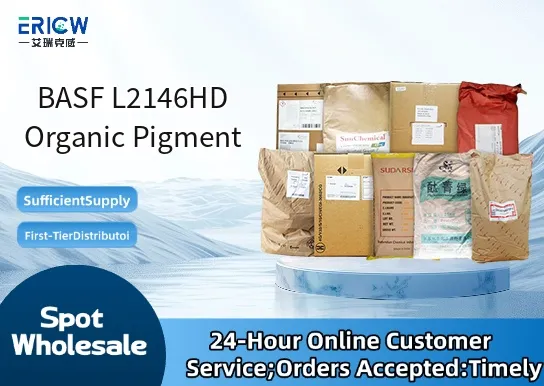
Excellent heat stability up to 280 °C for demanding processing conditions.
High tinctorial strength and clean red shade with superior chroma.
Outstanding lightfastness (ISO 105-B02, Grade 7–8) and weather resistance.
Good dispersibility in both polar and non-polar polymer matrices.
Compliant with global regulatory frameworks including EU REACH and US FDA 21 CFR for permitted applications.
Engineering plastics: polyamide (PA), polybutylene terephthalate (PBT), and polycarbonate (PC).
Automotive interior and exterior components requiring long-term color retention.
High-performance masterbatches for injection molding and extrusion processes.
Electrical and electronic housings where thermal stability and electrical insulation are critical.
Consumer goods including appliances, power tools, and premium packaging.
| Chemical Type | Quinacridone derivative |
| Product Form | Free-flowing powder |
| Appearance | Red-violet fine powder |
| Primary Applications | High-temperature engineering plastics |
| Key Features | Thermal stability, lightfastness, dispersibility |
| Benefits | Color consistency, low migration, minimal plate-out |
| Regulatory Status | REACH registered; compliant with FDA 21 CFR §178.3297 (for indirect food contact) |
| Recommended Loading Range | 0.2–1.5 wt% depending on substrate and performance requirements |
Q1: What is the primary chemical class and typical hue profile of BASF L2146HD?
A: BASF L2146HD is a high-performance quinacridone-based organic pigment, offering excellent lightfastness and weather resistance. It delivers a clean, bluish-red shade with strong tinting strength and good chroma in demanding applications.
Q2: Is BASF L2146HD suitable for use in food-contact plastics or coatings?
A: BASF L2146HD is not specifically designed or certified for direct food-contact applications. Its suitability depends on final formulation, processing conditions, and applicable regulatory requirements—users must conduct full compliance evaluation per target market and end-use.
Q3: How does BASF L2146HD perform under outdoor exposure and UV stress?
A: Thanks to its quinacridone backbone and optimized particle engineering, L2146HD exhibits very high resistance to UV degradation and long-term weathering—making it well-suited for exterior automotive coatings, architectural paints, and durable plastic applications where color retention is critical.
Q4: What dispersion methods are recommended for optimal performance in solvent-borne and water-borne systems?
A: For best results, high-shear dispersion using appropriate dispersants is recommended. In solvent-borne systems, ball milling or bead milling yields fine, stable dispersions; in water-borne systems, pre-wetting followed by high-speed dispersing or rotor-stator processing is typically effective. Optimization should be performed within the specific vehicle and resin system.
Q5: What is the typical dosage range when formulating with BASF L2146HD?
A: Dosage depends on the required opacity, color strength, and application matrix, but L2146HD is generally used at low concentrations—typically ranging from 0.1% to 2% by weight in final formulations—to achieve vibrant, consistent coloration without compromising physical properties.
Contact With Us:
E-mail: wangxingqiang@ericwchem.com
Have a Questions? Call Us:
Add:
Building A1, Jiete Industrial Park, Huangpu District, Guangzhou City, Guangdong Province, China