English
 Español
 tiếng việt
 русский
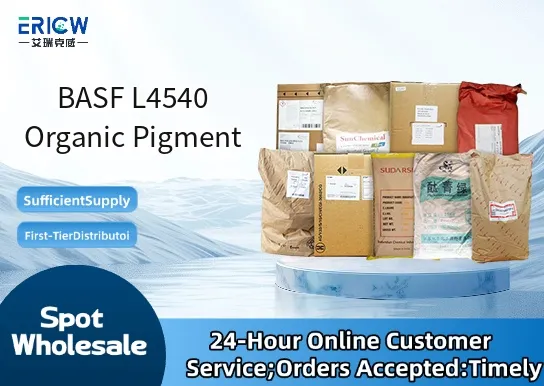
High thermal stability suitable for processing temperatures up to 280 °C.
Excellent lightfastness and weather resistance (Xenon fade rating ≥7 per ISO 105-B02).
Good dispersibility in polar and non-polar polymer matrices including polyolefins and engineering plastics.
Low volatility and minimal plate-out tendency during extrusion and injection molding.
Compliant with major global food-contact regulations (EU No 10/2011, FDA 21 CFR §178.3290).
Coloration of polypropylene (PP) fibers for automotive interior trim.
Masterbatch formulation for HDPE containers requiring UV durability.
Pigmentation of ABS and PC/ABS blends in consumer electronics housings.
High-performance coloring of thermoplastic elastomers (TPE) used in sealing profiles.
Specialty applications in medical-grade polymers where extractables control is critical.
| Chemical Type | Condensed azo pigment (C.I. Pigment Red 254) |
| Product Form | Free-flowing granular concentrate |
| Appearance | Reddish-brown granules |
| Primary Applications | Polyolefins, engineering thermoplastics, TPEs |
| Key Features | Thermal stability, low migration, high tinctorial strength |
| Benefits | Consistent color reproducibility, reduced processing defects, regulatory compliance |
| Recommended Carrier | PP or PE-based carrier system |
| Shelf Life | 24 months under dry, cool storage conditions (≤25 °C) |
Q1: What is the primary chemical class and typical hue profile of BASF L4540?
A: BASF L4540 is a high-performance perylene-based organic pigment, offering strong, clean red to maroon shades with excellent chroma and depth. Its molecular structure provides inherent stability toward light, heat, and migration in demanding applications.
Q2: Is BASF L4540 suitable for use in food-contact plastics or toys?
A: BASF L4540 is not certified for direct food-contact or toy applications under major global regulatory frameworks. It is intended for non-food industrial uses such as automotive coatings, engineering plastics, and high-end decorative finishes where regulatory compliance is governed by end-product specifications rather than direct migration requirements.
Q3: How does BASF L4540 perform in polyolefin masterbatches compared to other high-stability red pigments?
A: BASF L4540 demonstrates superior thermal stability and dispersion behavior in polyolefin systems, especially during high-temperature extrusion. It maintains color strength and minimal hue shift better than many quinacridone or diketopyrrolopyrrole alternatives under comparable processing conditions, making it well-suited for demanding PP and PE applications.
Q4: What are recommended dispersion aids or carrier resins when formulating with BASF L4540 in solvent-based coatings?
A: For optimal performance in solvent-borne systems, BASF L4540 responds well to conventional polymeric dispersants based on modified polyacrylates or polyester amides. Compatible carrier resins include alkyds, acrylics, and cellulose derivatives — selection should align with the target binder system and rheology requirements.
Contact With Us:
E-mail: wangxingqiang@ericwchem.com
Have a Questions? Call Us:
Add:
Building A1, Jiete Industrial Park, Huangpu District, Guangzhou City, Guangdong Province, China