English
 Español
 tiếng việt
 русский
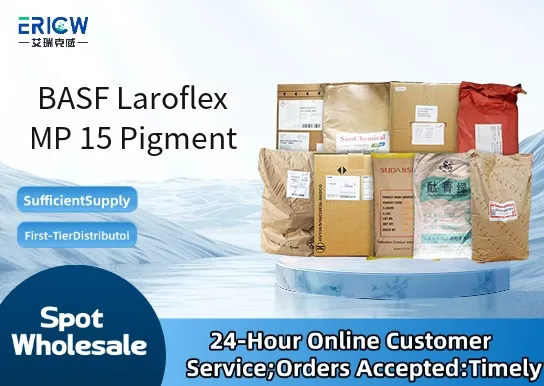
Highly dispersible pigment preparation optimized for polyurethane elastomer systems.
Excellent lightfastness and thermal stability up to 120 °C during processing.
Low viscosity paste format enabling easy incorporation without pre-wetting or milling.
Compatible with aromatic and aliphatic isocyanate-based PU formulations.
Consistent color strength and batch-to-batch reproducibility certified under BASF quality control.
Colored thermoplastic polyurethane (TPU) films and sheets.
Pigmented cast elastomer components for automotive seals and gaskets.
Colored microcellular PU foams used in footwear midsoles.
PU-coated technical textiles requiring durable, flexible coloration.
Industrial rollers and wear-resistant PU parts requiring UV-stable pigmentation.
| Chemical Type | Organic pigment dispersion in polyether polyol carrier |
| Product Form | Paste (non-dusting, solvent-free) |
| Appearance | Homogeneous, viscous dark brown paste |
| Primary Applications | Polyurethane elastomers, coatings, and foams |
| Key Features | Ready-to-use, high loading capacity, excellent dispersion stability |
| Benefits | Reduced processing time, improved color uniformity, lower dust exposure |
| Storage Stability | 12 months at 15–25 °C in sealed original container |
| VOC Content | <1 % (w/w), compliant with EU REACH and US EPA guidelines |
Q1: What is BASF Laroflex MP 15 Pigment, and how does it differ from conventional pigments?
A: Laroflex MP 15 Pigment is a specialized pre-dispersed pigment preparation based on high-performance organic pigments, formulated in a flexible polymeric carrier system. Unlike standard dry pigments or simple pigment pastes, it offers enhanced dispersibility in thermoplastic elastomers and soft PVC compounds, reduced dust generation during handling, and improved color consistency in final molded parts.
Q2: Which polymer systems is Laroflex MP 15 Pigment compatible with?
A: It is primarily designed for use in soft and medium-hard thermoplastic elastomers (TPEs), including TPU, TPE-S (styrenic block copolymers), and certain soft PVC formulations. Compatibility with other polymer matrices—such as polyolefins or rigid engineering plastics—should be verified experimentally, as performance depends on thermal stability, polarity match, and processing conditions.
Q3: What are the recommended processing conditions for optimal dispersion and color development?
A: For best results, process at temperatures within the stable range of the carrier system—typically between 160 °C and 200 °C—and ensure sufficient shear history during compounding or injection molding. Avoid prolonged residence times above 210 °C to prevent potential degradation of the polymeric dispersant or pigment.
Q4: How should Laroflex MP 15 Pigment be stored to maintain its performance?
A: Store in original sealed packaging at temperatures between 5 °C and 30 °C, away from direct sunlight and sources of heat or humidity. Prolonged exposure to elevated temperatures or moisture may affect flow behavior and dispersion stability upon incorporation into the base polymer.
Contact With Us:
E-mail: wangxingqiang@ericwchem.com
Have a Questions? Call Us:
Add:
Building A1, Jiete Industrial Park, Huangpu District, Guangzhou City, Guangdong Province, China