English
 Español
 tiếng việt
 русский
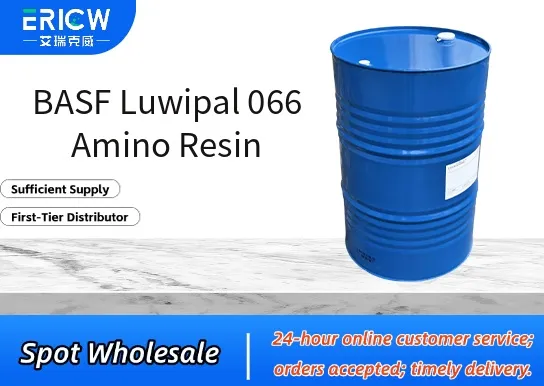
Highly reactive melamine-formaldehyde resin with excellent crosslinking efficiency.
Low formaldehyde emission profile, supporting sustainable coating formulations.
Outstanding compatibility with acrylic, polyester, and alkyd resins.
Enables fast cure at moderate baking temperatures (140–160 °C).
Delivers superior hardness, chemical resistance, and gloss retention in cured films.
Automotive OEM and refinish topcoats.
Industrial coil coatings for metal substrates.
Appliance enamel coatings requiring high durability.
Powder coating hybrid systems (e.g., polyester-melamine blends).
| Chemical Type | Melamine-formaldehyde condensate |
| Product Form | Liquid |
| Appearance | Clear to slightly yellowish, low-viscosity liquid |
| Solvent Content | Butanol/water mixture (approx. 70–75 wt%) |
| Non-Volatile Content | 25–28 wt% |
| pH (10% aqueous solution) | 7.5–8.5 |
| Storage Stability | ≥6 months at 20 °C in sealed container |
| Primary Applications | Crosslinker for thermosetting decorative and protective coatings |
Q1: What is the primary function of Luwipal 066 in coating formulations?
A: Luwipal 066 functions as a crosslinking agent, primarily enhancing hardness, chemical resistance, and thermal stability in thermosetting acrylic, polyester, and alkyd-based coatings. It reacts with hydroxyl or carboxyl groups under heat to form a durable, three-dimensional network.
Q2: Is Luwipal 066 suitable for low-bake or ambient-cure systems?
A: Luwipal 066 is designed for thermal curing and typically requires baking temperatures above 120 °C for efficient crosslinking. While catalysts (e.g., acidic co-catalysts) can lower the onset temperature, it is not recommended for true ambient-cure applications without significant formulation adaptation and performance trade-offs.
Q3: How does Luwipal 066 compare to melamine-formaldehyde resins in terms of formaldehyde release?
A: As a highly methylolated amino resin with low free formaldehyde content, Luwipal 066 offers improved handling safety and reduced emission potential compared to conventional high-free-formaldehyde melamine resins—though formaldehyde release during cure remains dependent on formulation, catalyst type, and bake conditions.
Q4: What solvents or diluents are commonly used to adjust viscosity or improve compatibility?
A: Luwipal 066 is typically supplied in aromatic hydrocarbons or alcohol-based solvents. It shows good compatibility with common organic solvents such as xylene, butanol, and isopropanol. Selection should consider polarity match with the base resin and avoid strongly protic or highly reactive media that may induce premature condensation.
Q5: Can Luwipal 066 be used in waterborne systems?
A: Luwipal 066 is an organic-soluble resin and is not inherently compatible with waterborne dispersions. For aqueous applications, BASF recommends evaluating alternative amino resins specifically designed for waterborne technology—or using appropriate emulsification strategies and co-solvent blends, subject to thorough stability and performance testing.
Contact With Us:
E-mail: wangxingqiang@ericwchem.com
Have a Questions? Call Us:
Add:
Building A1, Jiete Industrial Park, Huangpu District, Guangzhou City, Guangdong Province, China