English
 Español
 tiếng việt
 русский
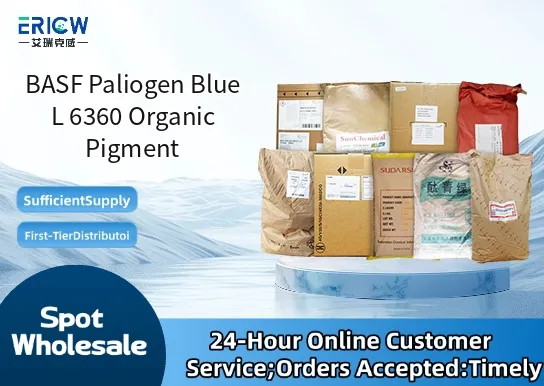
Exceptional lightfastness and weather resistance for long-term color stability.
High thermal stability suitable for processing up to 280 °C in polymer applications.
Outstanding chemical resistance to acids, alkalis, and solvents.
Strong tinting strength with excellent transparency and clean blue shade.
Low volatility and minimal extractables — compliant with stringent regulatory requirements for plastics and coatings.
Engineering plastics including polyolefins, polyesters, and polycarbonates.
Automotive exterior and interior plastic components.
High-performance industrial coatings and coil coatings.
Electrical and electronic (E&E) housings requiring UV and heat resistance.
Packaging films where food-contact compliance and migration control are critical.
| Chemical Type | Polycyclic quinacridone derivative |
| Product Form | Free-flowing powder |
| Appearance | Dark blue-violet crystalline powder |
| Primary Applications | Plastics, high-performance coatings, masterbatches |
| Key Features | High thermal stability, excellent lightfastness, low extractables |
| Benefits | Color consistency in demanding processing conditions; regulatory readiness for global markets |
| Regulatory Status | Compliant with EU REACH, US FDA 21 CFR §178.3297 (for polymers), and ISO 8124-3 (toys) |
| Particle Size (D50) | Approx. 0.08–0.12 µm (by laser diffraction) |
Q1: What are the key performance advantages of Paliogen Blue L 6360 compared to conventional phthalocyanine blues?
A: Paliogen Blue L 6360 offers significantly enhanced thermal stability and superior resistance to migration in polymer melts, particularly in demanding applications such as polyolefin coloring and high-temperature masterbatches. Its molecular structure provides improved lightfastness and weathering resistance without sacrificing dispersibility.
Q2: Is Paliogen Blue L 6360 suitable for use in food-contact plastics?
A: Paliogen Blue L 6360 is designed for non-food-contact applications. It is not approved for direct food-contact use under major global regulatory frameworks. For food-safe coloring, BASF recommends evaluating alternative pigments specifically certified for such applications.
Q3: How does this pigment perform in high-clarity polypropylene films?
A: Paliogen Blue L 6360 delivers excellent transparency and minimal haze in thin-gauge polypropylene films when properly dispersed. Its fine particle size distribution and low agglomeration tendency support high clarity, making it well-suited for premium packaging and technical film applications.
Q4: What dispersion methods are recommended for optimal performance in engineering thermoplastics?
A: High-shear compounding—such as twin-screw extrusion with optimized screw profile and residence time—is strongly recommended. Pre-dispersed concentrates or liquid preparations may further enhance uniformity in sensitive systems like polycarbonate or PBT. Avoid excessive thermal stress during processing to preserve pigment integrity.
Contact With Us:
E-mail: wangxingqiang@ericwchem.com
Have a Questions? Call Us:
Add:
Building A1, Jiete Industrial Park, Huangpu District, Guangzhou City, Guangdong Province, China