English
 Español
 tiếng việt
 русский
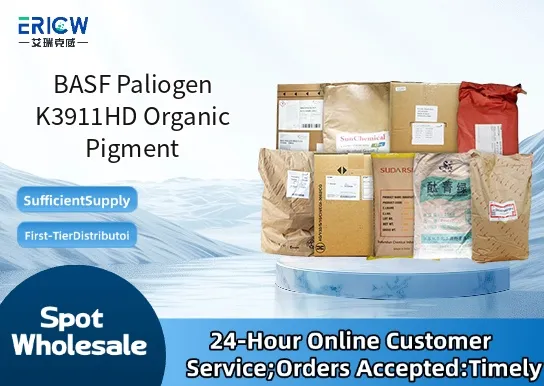
High thermal stability suitable for high-temperature processing up to 280 °C.
Excellent lightfastness and weather resistance (ISO 105-B02, grade 7–8).
Outstanding chemical resistance to acids, alkalis, and solvents.
Strong tinctorial strength with high chroma and clean blue-shade red hue.
Good dispersibility in both solvent-based and water-based systems.
Automotive coatings requiring long-term durability and color consistency.
Industrial coil coatings for metal roofing and cladding.
Plastic coloring for engineering thermoplastics including polyolefins and ABS.
High-performance printing inks for packaging and security applications.
Specialty powder coatings demanding high gloss and minimal bleed.
| Chemical Type | Polycyclic quinacridone derivative |
| Product Form | Free-flowing dry powder |
| Appearance | Deep red-violet powder |
| Primary Applications | Coatings, plastics, inks |
| Key Features | Thermal stability, lightfastness, chemical resistance |
| Particle Size (D50) | 0.15–0.25 µm |
| Volatile Matter (105 °C) | ≤ 0.5 wt% |
| Heavy Metals | Compliant with EU Directive 2009/48/EC (Toy Safety) |
Q1: What is the primary chemical class and key performance characteristic of Paliogen K3911HD?
A: Paliogen K3911HD is a high-performance perylene-based organic pigment, distinguished by exceptional thermal stability, outstanding lightfastness, and excellent resistance to migration in demanding polymer applications—particularly where long-term color integrity under heat and UV exposure is critical.
Q2: In which polymer systems is Paliogen K3911HD most commonly processed?
A: It is widely used in high-temperature engineering thermoplastics such as polyphenylene sulfide (PPS), polyetherimide (PEI), and polyetheretherketone (PEEK), as well as in certain polyesters and liquid crystal polymers (LCPs) where conventional pigments may degrade or bleed during melt processing.
Q3: Is Paliogen K3911HD suitable for food-contact or medical-grade applications?
A: While Paliogen K3911HD is not specifically certified for direct food contact or implantable medical devices, it complies with general regulatory frameworks for colorants in plastics (e.g., FDA 21 CFR §178.3297 for polymer colorants, EU Directive 2002/72/EC for plastic materials). End-use compliance requires full formulation evaluation and validation by the compounder or end user.
Q4: How does dispersion behavior compare to other high-temperature pigments?
A: Paliogen K3911HD exhibits good dispersibility in molten polymers when processed using standard compounding techniques (e.g., twin-screw extrusion), though optimal results typically require careful optimization of shear profile and residence time—especially in low-viscosity or highly filled systems where agglomeration risk increases.
Q5: What is the typical dosage range in polymer masterbatches?
A: Dosage depends on the desired shade strength and final application requirements, but it is generally used at low concentrations—typically ranging from 0.1% to 2% by weight in the final polymer—due to its high tinctorial strength and efficient color development in high-temperature matrices.
Contact With Us:
E-mail: wangxingqiang@ericwchem.com
Have a Questions? Call Us:
Add:
Building A1, Jiete Industrial Park, Huangpu District, Guangzhou City, Guangdong Province, China