English
 Español
 tiếng việt
 русский
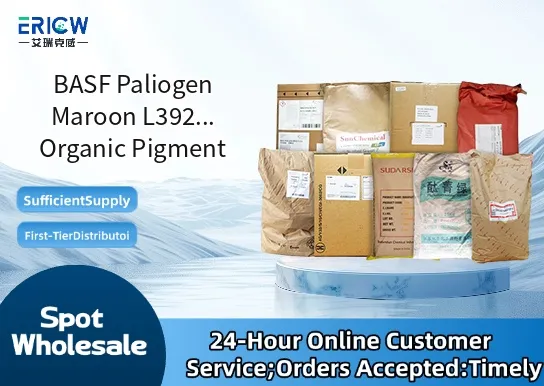
High thermal stability suitable for demanding processing conditions up to 300 °C.
Excellent lightfastness and weather resistance in outdoor applications.
Strong tinting strength with high chroma and clean maroon hue.
Good dispersibility in both solvent-based and water-based systems.
Compliant with major global regulatory frameworks including REACH and FDA 21 CFR for applicable uses.
Automotive coatings (basecoat and clearcoat systems).
Industrial coil and can coatings.
Plastic coloration for engineering thermoplastics (e.g., ABS, PS, PC).
High-performance printing inks for packaging and security applications.
Specialty decorative paints and architectural coatings requiring durable maroon shades.
| Chemical Type | Polycyclic quinacridone derivative |
| Product Form | Fine powder |
| Appearance | Dark maroon to violet-red free-flowing powder |
| Primary Applications | Coatings, plastics, inks |
| Key Features | Thermal stability, lightfastness, chemical resistance |
| Benefits | Color consistency, low migration, excellent dispersion |
| Particle Size (D50) | Approx. 0.15–0.25 µm |
| Specific Surface Area | 45–55 m²/g |
Q1: What are the primary application areas for Paliogen Maroon L392?
A: Paliogen Maroon L392 is widely used in high-performance industrial coatings, automotive basecoats, and engineering plastics where excellent heat stability, lightfastness, and chromatic strength are required. It is also suitable for select ink systems demanding maroon-to-burgundy shades with good dispersion behavior.
Q2: How does Paliogen Maroon L392 perform under thermal processing conditions?
A: This pigment exhibits good thermal stability, making it suitable for melt-processing applications such as polyolefin and engineering thermoplastic compounding. Performance remains consistent at typical extrusion and injection molding temperatures, though prolonged exposure above 280 °C may affect shade intensity depending on the polymer matrix and residence time.
Q3: Is Paliogen Maroon L392 compatible with common organic solvent-based and water-based coating systems?
A: Yes — it demonstrates good compatibility and dispersion stability in both solvent-borne systems (e.g., acrylic, polyester, and polyurethane resins) and selected waterborne formulations when properly dispersed using appropriate surfactants or polymeric dispersants. Optimization of grinding and stabilization is recommended to achieve optimal gloss and color development.
Q4: What is the typical dosage range for achieving full opacity and chromatic strength?
A: Dosage depends on formulation requirements and desired shade depth, but Paliogen Maroon L392 is typically used at low concentrations due to its high tinctorial strength. In most coating and plastic applications, effective loading generally ranges from 0.1% to 2% by weight relative to the total formulation.
Contact With Us:
E-mail: wangxingqiang@ericwchem.com
Have a Questions? Call Us:
Add:
Building A1, Jiete Industrial Park, Huangpu District, Guangzhou City, Guangdong Province, China