English
 Español
 tiếng việt
 русский
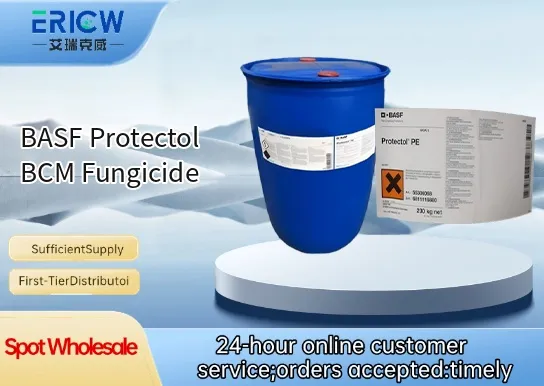
Broad-spectrum fungicidal activity against key wood-decaying and stain fungi, including *Coniophora puteana*, *Trametes versicolor*, and *Aspergillus niger*.
Low volatility and excellent leach resistance, ensuring long-term protection in demanding outdoor and ground-contact applications.
Compatible with common wood preservative systems and processing methods, including vacuum-pressure impregnation (VPI) and dip treatment.
Non-systemic mode of action based on benzimidazole chemistry, providing reliable preventive control without plant uptake concerns.
Stable under typical storage conditions and compatible with alkaline formulations used in industrial wood treatment.
Protective treatment of softwood and hardwood for exterior construction timber, including decking, fencing, and cladding.
Preservation of utility poles, railway sleepers, and other ground-contact or freshwater-immersed timber structures.
Formulation component in industrial wood preservatives for factory-applied treatments.
Control of fungal discoloration and decay in engineered wood products such as glulam and LVL.
Protection of cellulose-based building materials, including fiberboard and plywood, during storage and service life.
| Chemical Type | Benzimidazole derivative (BCM: 1-(Butylcarbamoyl)-3-(4-chlorobenzyl)benzimidazolium chloride) |
| Product Form | Liquid concentrate |
| Appearance | Pale yellow to amber clear liquid |
| pH (1% aqueous solution) | 6.5 – 7.5 |
| Solubility in Water | Freely soluble (>500 g/L at 20 °C) |
| Density (20 °C) | 1.12 – 1.16 g/cm³ |
| Primary Applications | Wood preservation, fungal stain control, industrial biocide for cellulose materials |
| Key Features | Broad-spectrum efficacy, low leaching, VPI-compatible, non-systemic |
Q1: What is the primary mode of action of Protectol BCM?
A: Protectol BCM functions as a broad-spectrum fungistatic agent, primarily inhibiting fungal growth through interference with essential metabolic pathways in molds, yeasts, and bacteria. Its activity is optimized under neutral to slightly alkaline conditions and is most effective when evenly distributed within the formulation matrix.
Q2: In which types of industrial applications is Protectol BCM commonly used?
A: Protectol BCM is widely applied in water-based industrial systems where microbial spoilage poses a risk—such as metalworking fluids, latex emulsions, adhesives, architectural coatings, and pigment dispersions. It is especially valued for its stability in high-shear environments and compatibility with common anionic and nonionic surfactants.
Q3: Is Protectol BCM suitable for use in products intended for contact with food or potable water?
A: Protectol BCM is not approved for direct, unregulated contact with food or drinking water systems. Its use in food-contact applications requires prior evaluation and compliance with applicable regional regulatory frameworks, including formal authorization where mandated. Always consult local regulatory guidance before incorporation into such formulations.
Q4: How should Protectol BCM be stored to maintain optimal performance?
A: Store Protectol BCM in its original sealed container in a cool, dry, well-ventilated area, away from direct sunlight and strong oxidizing agents. Under these conditions, shelf life typically exceeds 24 months. Avoid freezing, and ensure containers are tightly closed after each use to prevent moisture uptake and potential degradation.
Contact With Us:
E-mail: wangxingqiang@ericwchem.com
Have a Questions? Call Us:
Add:
Building A1, Jiete Industrial Park, Huangpu District, Guangzhou City, Guangdong Province, China