English
 Español
 tiếng việt
 русский
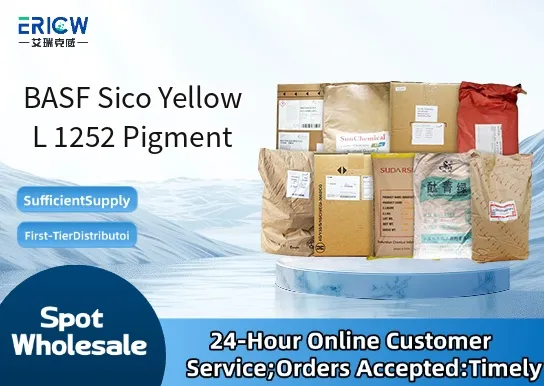
High chroma and excellent lightfastness in demanding outdoor applications.
Good thermal stability suitable for processing up to 200 °C.
Outstanding dispersion behavior in both solvent-based and water-based systems.
Low volatility and minimal extractables, supporting compliance with stringent regulatory requirements.
Consistent batch-to-batch color reproducibility and particle size distribution.
Automotive basecoat and clearcoat systems.
Industrial coil coatings for architectural and appliance substrates.
Plastic coloration including polyolefins and engineering thermoplastics.
High-performance powder coatings requiring weather resistance.
Pigment dispersions for premium printing inks and specialty paints.
| Chemical Type | Azo pigment (Benzimidazolone derivative) |
| Product Form | Free-flowing dry powder |
| Appearance | Bright yellow granular powder |
| Primary Applications | Coatings, plastics, inks |
| Key Features | Lightfastness (ISO 105-B02): ≥7, Weather resistance (QUV): Excellent |
| Benefits | Reduced formulation complexity, improved gloss retention, low migration in polymers |
| Recommended Dispersants | Polymeric dispersants, e.g., EFKA-46, Disperbyk-161 |
| Storage Conditions | Store in cool, dry place; protect from moisture and direct sunlight |
Q1: What is the primary chemical class and pigment type of Sico Yellow L 1252?
A: Sico Yellow L 1252 is an organic pigment based on the monoazo chemical class, specifically engineered for high chroma, clean yellow shade, and excellent lightfastness in demanding applications.
Q2: Is this pigment suitable for use in food-contact plastics or inks?
A: Sico Yellow L 1252 is not certified for direct food-contact applications. It is intended for general industrial uses such as automotive coatings, industrial finishes, and non-food packaging inks where regulatory compliance with food safety standards is not required.
Q3: How does Sico Yellow L 1252 perform in terms of heat stability and weather resistance?
A: This pigment exhibits good thermal stability up to approximately 220 °C for short-term processing and delivers strong resistance to UV exposure and atmospheric conditions when properly formulated and applied—making it well-suited for exterior architectural and automotive refinish systems.
Q4: What are typical dosage ranges and dispersion recommendations?
A: Dosage depends on formulation requirements and desired opacity or tint strength, but it is typically used at low concentrations—generally ranging from 0.1% to 2% by weight in final systems. Optimal performance requires thorough dispersion using standard high-shear equipment; pre-dispersed paste forms or compatible surfactant systems are recommended for consistent color development.
Q5: Can Sico Yellow L 1252 be used alongside common inorganic pigments like titanium dioxide or iron oxides?
A: Yes—Sico Yellow L 1252 demonstrates good compatibility with a broad range of inorganic and organic pigments, including TiO₂ and iron oxides, enabling stable, reproducible color blends in multi-pigment systems without significant flocculation or hue shift under standard processing conditions.
Contact With Us:
E-mail: wangxingqiang@ericwchem.com
Have a Questions? Call Us:
Add:
Building A1, Jiete Industrial Park, Huangpu District, Guangzhou City, Guangdong Province, China