English
 Español
 tiếng việt
 русский
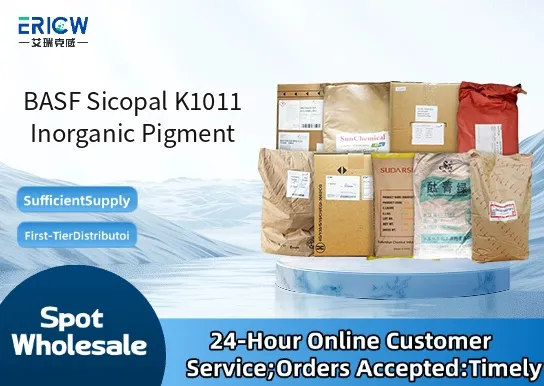
High thermal stability suitable for processing temperatures up to 800 °C.
Excellent chemical resistance against acids, alkalis, and solvents.
Non-toxic formulation compliant with REACH and RoHS directives.
Consistent particle size distribution ensuring uniform dispersion and color strength.
UV-resistant with minimal fading under prolonged outdoor exposure.
Ceramic glazes and frits for tableware and architectural tiles.
High-performance coatings for industrial and automotive heat-resistant components.
Coloration of refractory materials including firebricks and kiln furniture.
Functional pigments in glass enamels and vitreous coatings.
Stabilized colorants for engineering plastics requiring elevated processing temperatures.
| Chemical Type | Mixed metal oxide (spinel-type) |
| Product Form | Fine dry powder |
| Appearance | Dark bluish-black granular powder |
| Primary Applications | Ceramics, refractories, high-temp coatings, glass enamels |
| Key Features | Thermal stability, chemical inertness, lightfastness |
| Benefits | Color consistency, low volatility, no heavy metal leaching |
| Density (g/cm³) | 4.2–4.5 |
| BET Surface Area (m²/g) | 5–10 |
Q1: What is the primary chemical composition and classification of Sicopal K1011?
A: Sicopal K1011 is a high-performance inorganic pigment based on mixed metal oxides, classified as a complex inorganic colored pigment (CICP). It is engineered for exceptional thermal stability and chemical inertness, with no organic chromophores or volatile components.
Q2: Is Sicopal K1011 suitable for use in food-contact plastics?
A: Yes — Sicopal K1011 is specifically designed and qualified for use in food-contact applications where regulatory compliance and migration resistance are critical. Its inorganic nature ensures low extractability and long-term stability under typical processing and end-use conditions.
Q3: How does Sicopal K1011 perform under high-temperature processing conditions?
A: Sicopal K1011 exhibits excellent thermal stability, maintaining color integrity and dispersion quality during standard polymer processing methods including injection molding, extrusion, and blow molding — even at temperatures exceeding 280 °C.
Q4: What types of polymers is Sicopal K1011 typically compatible with?
A: Sicopal K1011 demonstrates broad compatibility with engineering thermoplastics such as polypropylene (PP), polyethylene (PE), polyamide (PA), and polybutylene terephthalate (PBT), as well as high-heat resins like polyphenylene sulfide (PPS) and polyetherimide (PEI).
Q5: What is the recommended dosage range for optimal coloration and performance?
A: Dosage depends on the desired shade intensity and base polymer, but Sicopal K1011 is typically used at low concentrations — generally ranging from 0.1% to 2% by weight — due to its high tinting strength and efficient dispersion characteristics.
Contact With Us:
E-mail: wangxingqiang@ericwchem.com
Have a Questions? Call Us:
Add:
Building A1, Jiete Industrial Park, Huangpu District, Guangzhou City, Guangdong Province, China