English
 Español
 tiếng việt
 русский
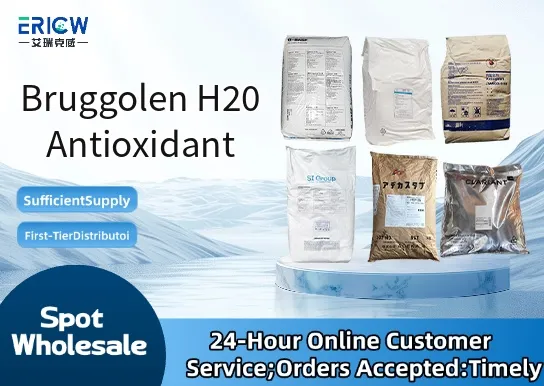
High-performance hindered phenolic antioxidant for superior long-term thermal stability.
Excellent compatibility with polyolefins, including polyethylene (PE) and polypropylene (PP).
Low volatility and minimal migration, ensuring consistent protection during processing and service life.
Non-staining and low-color formation, preserving aesthetic integrity of final products.
REACH-compliant formulation with no SVHCs above threshold concentrations.
Stabilization of blow-molded and injection-molded polyolefin packaging.
Antioxidant component in automotive interior polypropylene trim and dashboards.
Protection of HDPE pipes and geomembranes exposed to elevated temperatures and UV stress.
Additive for spunbond and meltblown nonwovens used in medical and filtration applications.
Stabilizer in food-contact compliant PE films and containers.
| Chemical Type | Hindered phenol |
| Product Form | Pellets |
| Appearance | Off-white to light beige free-flowing pellets |
| Primary Applications | Polyolefin stabilization (PE, PP), packaging, automotive, infrastructure |
| Key Features | Thermal stability, low volatility, non-staining, regulatory compliance |
| Benefits | Extended polymer lifetime, reduced discoloration, improved melt processability |
| Storage Conditions | Store in cool, dry place below 30°C; protect from direct sunlight and moisture |
| Regulatory Status | REACH registered; compliant with FDA 21 CFR §178.2010 (for food-contact use) |
Q1: What is Bruggolen H20 Antioxidant primarily used for?
A: Bruggolen H20 Antioxidant is a water-dispersible antioxidant formulation designed to protect water-based polymer systems—including emulsion polymers, latexes, and aqueous coatings—against oxidative degradation during processing, storage, and end-use.
Q2: Is Bruggolen H20 compatible with common water-based industrial formulations?
A: Yes—it is engineered for broad compatibility with anionic, nonionic, and weakly cationic aqueous systems, including acrylic, styrene-butadiene, and vinyl acetate copolymer dispersions. Compatibility testing under specific formulation conditions is recommended prior to full-scale integration.
Q3: How is Bruggolen H20 typically incorporated into a production process?
A: It can be added directly to the aqueous phase during polymerization or post-polymerization, or blended into finished dispersions using low-shear mixing. Its water dispersibility eliminates the need for organic solvents or high-energy dispersion equipment.
Q4: Does Bruggolen H20 affect the stability or appearance of latex or emulsion products?
A: When used within recommended dosage ranges, it generally maintains colloidal stability and does not induce coagulation, viscosity drift, or visible haze in well-formulated systems. Performance may vary depending on ionic strength, pH, and surfactant profile.
Q5: What is the typical dosage range for Bruggolen H20 Antioxidant?
A: Dosage depends on formulation requirements and oxidative stress exposure, but it is typically used at low concentrations—generally ranging from 0.1% to 2% by weight relative to the polymer solids content.
Contact With Us:
E-mail: wangxingqiang@ericwchem.com
Have a Questions? Call Us:
Add:
Building A1, Jiete Industrial Park, Huangpu District, Guangzhou City, Guangdong Province, China