English
 Español
 tiếng việt
 русский
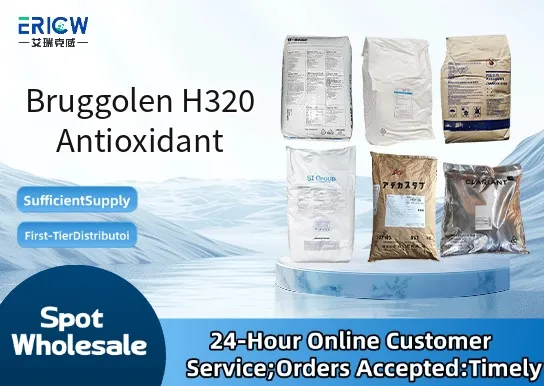
High-performance hindered phenolic antioxidant offering exceptional thermal and oxidative stability.
Low volatility and excellent compatibility with polyolefins, styrenics, and engineering thermoplastics.
Non-staining and low migration, ensuring long-term color retention in sensitive applications.
Meets stringent regulatory requirements including FDA 21 CFR §178.2010 and EU Directive 10/2011 for food-contact plastics.
Easy handling as free-flowing crystalline powder with consistent particle size distribution.
Polypropylene (PP) fibers and nonwovens for medical and hygiene products.
Polyethylene (PE) blow-molded containers for pharmaceutical and agrochemical packaging.
Automotive interior components requiring long-term UV and heat resistance.
Food-grade rigid packaging films and trays.
Recycled polyolefin compounds where processing stability and reversion control are critical.
| Chemical Type | Hindered phenol (mono-phenolic) |
| Product Form | Free-flowing white crystalline powder |
| Appearance | White to off-white granular solid |
| Melting Point | 128–132 °C |
| Assay (by HPLC) | ≥ 99.0% |
| Volatile Matter (105 °C, 2 h) | ≤ 0.1% |
| Ash Content | ≤ 0.05% |
| Primary Applications | Polyolefins, styrenics, engineering plastics |
Q1: What is the primary function of Bruggolen H320 in polymer processing?
A: Bruggolen H320 is a high-performance hindered phenolic antioxidant designed to protect thermoplastics—especially polyolefins such as PP and PE—against thermo-oxidative degradation during melt processing and long-term service life. It helps maintain mechanical properties, color stability, and molecular weight integrity under elevated temperatures and shear stress.
Q2: Is Bruggolen H320 suitable for food-contact or medical-grade polymer applications?
A: Bruggolen H320 is formulated for use in polymers intended for indirect food contact applications where regulatory compliance is required. While it is not inherently restricted for medical use, final suitability depends on full system validation—including compatibility with other additives and end-use conditions—as well as adherence to applicable regional regulatory frameworks.
Q3: How does Bruggolen H320 compare to conventional phenolic antioxidants in terms of thermal stability?
A: Bruggolen H320 offers enhanced thermal stability compared to many standard monophenolic antioxidants, allowing it to remain effective during high-temperature extrusion and injection molding processes. Its molecular structure provides improved resistance to volatilization and decomposition, supporting consistent performance in demanding processing environments.
Q4: What is the typical dosage range for Bruggolen H320 in polyolefin formulations?
A: Dosage is formulation-dependent, but Bruggolen H320 is typically used at low concentrations—generally ranging from 0.1% to 2% by weight—depending on polymer type, processing severity, and desired service lifetime. Optimization is recommended via lab-scale trials to balance performance, cost, and compatibility with co-additives.
Contact With Us:
E-mail: wangxingqiang@ericwchem.com
Have a Questions? Call Us:
Add:
Building A1, Jiete Industrial Park, Huangpu District, Guangzhou City, Guangdong Province, China