English
 Español
 tiếng việt
 русский
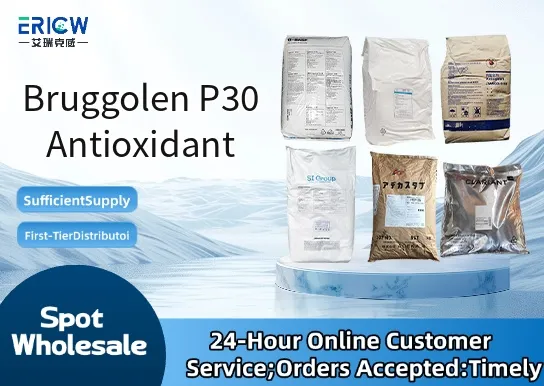
High-performance phenolic antioxidant offering excellent thermal and oxidative stability.
Low volatility and superior migration resistance in polymer matrices.
Compatible with polyolefins, engineering plastics, and elastomers.
Meets global regulatory requirements including FDA 21 CFR §178.2010 and EU Directive 10/2011 for food-contact applications.
Easy to disperse with minimal impact on color or clarity of end products.
Polypropylene (PP) and polyethylene (PE) packaging films and containers.
Automotive interior components exposed to elevated temperatures and UV stress.
Medical-grade polyolefin tubing and syringes requiring long-term shelf stability.
Household appliances and durable consumer goods made from thermoplastics.
Cable jacketing and insulation materials for electrical and electronic applications.
| Chemical Type | Synthetic hindered phenol |
| Product Form | Free-flowing white to off-white granules |
| Appearance | Uniform granular solid, no visible impurities |
| Primary Applications | Polyolefins, engineering thermoplastics, elastomers |
| Key Features | Thermal stability up to 240°C, low extraction rate |
| Benefits | Extended product lifetime, reduced discoloration, enhanced processing safety |
| Recommended Loading Level | 0.1–0.5 wt% depending on polymer and service conditions |
| Storage Conditions | Store in cool, dry place below 30°C; protect from direct sunlight and moisture |
Q1: What is the primary function of Bruggolen P30 in polymer processing?
A: Bruggolen P30 is a high-performance hindered phenolic antioxidant designed to protect thermoplastics—especially polyolefins such as PP and HDPE—against thermal and oxidative degradation during melt processing and long-term service life. It helps maintain mechanical properties, color stability, and molecular integrity under elevated temperatures.
Q2: Is Bruggolen P30 suitable for food-contact or pharmaceutical-grade applications?
A: Bruggolen P30 is formulated for industrial polymer stabilization and is not pre-qualified for direct food-contact or pharmaceutical use. Its suitability for regulated applications depends on full compliance evaluation by the end-user, including assessment against applicable regional regulatory frameworks and final formulation testing.
Q3: How is Bruggolen P30 typically incorporated into polymer systems?
A: It is commonly added during compounding via masterbatch dilution or direct dry-blend feeding. Due to its excellent thermal stability and low volatility, it remains effective through extrusion, injection molding, and other high-shear, high-temperature processes without significant loss or decomposition.
Q4: Does Bruggolen P30 exhibit compatibility with common polymer additives?
A: Yes—it shows good synergistic behavior with phosphite secondary antioxidants and UV stabilizers, and is generally compatible with standard processing aids, fillers, and pigments used in polyolefin systems. Compatibility should always be verified in the final formulation to ensure no adverse interactions or blooming.
Q5: What are the recommended storage conditions for Bruggolen P30?
A: Store in original unopened packaging at room temperature (15–25 °C), in a dry, well-ventilated area away from direct sunlight and strong oxidizing agents. Prolonged exposure to heat, humidity, or air may affect performance over time, so containers should be kept tightly sealed after opening.
Contact With Us:
E-mail: wangxingqiang@ericwchem.com
Have a Questions? Call Us:
Add:
Building A1, Jiete Industrial Park, Huangpu District, Guangzhou City, Guangdong Province, China