English
 Español
 tiếng việt
 русский
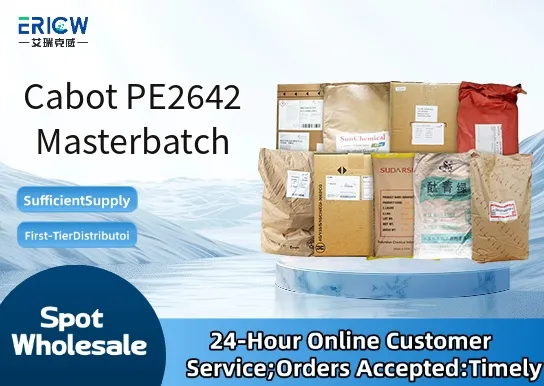
Highly concentrated carbon black dispersion for consistent color and performance.
Optimized for polyethylene (PE) resins, ensuring excellent melt compatibility and process stability.
Low dust formulation enhances workplace safety and reduces equipment contamination.
Excellent thermal stability supports high-output extrusion and blow molding operations.
Reproducible rheology and dispersion quality across production batches.
HDPE and LDPE blow-molded containers (e.g., bottles, drums, fuel tanks).
Extruded PE films for packaging, agricultural, and geomembrane applications.
Injection-molded PE parts requiring UV protection and uniform black shade.
Rotomolded PE tanks and industrial components.
PE pipes and fittings where pigment consistency and long-term weatherability are critical.
| Chemical Type | Carbon black masterbatch |
| Product Form | Pellets |
| Appearance | Free-flowing black pellets |
| Base Resin | Linear low-density polyethylene (LLDPE) |
| Carbon Black Content | 25 ± 1 wt% |
| Melt Flow Rate (190°C/2.16 kg) | 18–22 g/10 min |
| Moisture Content | ≤ 0.2 wt% |
| Key Features | Good dispersion, low volatility, low extractables |
Q1: What is the primary function of Cabot PE2642 Masterbatch in polyethylene applications?
A: Cabot PE2642 Masterbatch is a carbon black–based concentrate engineered to provide consistent jetness, UV protection, and electrical conductivity control in polyethylene compounds—particularly for blow-molded and extruded products requiring enhanced surface quality and long-term outdoor stability.
Q2: Is Cabot PE2642 compatible with all types of polyethylene resins?
A: It is specifically formulated for use with HDPE, LDPE, and LLDPE resins. Compatibility may vary with highly branched or specialty PE grades; we recommend conducting small-scale dispersion and performance trials to confirm optimal incorporation and pigment distribution.
Q3: How should Cabot PE2642 be incorporated into the base polymer?
A: Standard melt-compounding methods—including twin-screw extrusion and high-shear mixing—are recommended. Pre-drying is not required, but uniform feeding and adequate residence time are essential to ensure complete dispersion and avoid agglomerates.
Q4: Does Cabot PE2642 meet regulatory requirements for food-contact applications?
A: Cabot PE2642 is manufactured using food-grade carrier resin and carbon black suitable for indirect food-contact applications where permitted by local regulations. Final compliance depends on the full formulation, processing conditions, and applicable jurisdictional requirements—validation testing is advised.
Q5: What is the typical dosage range for Cabot PE2642 in PE compounds?
A: Dosage generally ranges from 0.1% to 2% by weight, depending on the desired level of blackness, UV protection, and conductivity control. Optimal loading should be determined empirically based on end-use performance targets and processing constraints.
Contact With Us:
E-mail: wangxingqiang@ericwchem.com
Have a Questions? Call Us:
Add:
Building A1, Jiete Industrial Park, Huangpu District, Guangzhou City, Guangdong Province, China