English
 Español
 tiếng việt
 русский
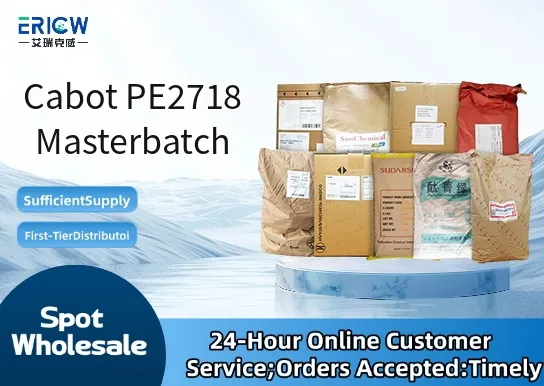
Highly concentrated carbon black dispersion for consistent color and performance in polyethylene matrices.
Optimized for excellent melt flow and processing stability in high-output extrusion and injection molding operations.
Low dust formulation enhancing workplace safety and reducing equipment contamination during handling.
Superior UV stabilization properties extending service life of outdoor polyethylene products.
Compatible with virgin and recycled HDPE/LDPE resins without compromising mechanical integrity.
Blow-molded containers for agricultural chemicals and industrial liquids.
Rotomolded tanks and storage vessels requiring long-term weather resistance.
Extruded geomembranes used in landfill liners and pond liners.
Injection-molded caps, closures, and automotive under-hood components.
Woven and nonwoven geotextiles for civil engineering applications.
| Chemical Type | Carbon black masterbatch |
| Product Form | Pellets |
| Appearance | Black, free-flowing cylindrical pellets |
| Base Polymer | Linear low-density polyethylene (LLDPE) |
| Carbon Black Loading | 25 ± 1 wt% |
| Density (g/cm³) | 0.95–0.97 |
| Melt Flow Rate (190°C/2.16 kg) | 15–25 g/10 min |
| Key Features | UV resistance, dispersion stability, low volatility, FDA-compliant for indirect food contact (per 21 CFR §178.3290) |
Q1: What is the primary function of Cabot PE2718 Masterbatch in polyethylene applications?
A: Cabot PE2718 Masterbatch is a carbon black–based concentrate engineered to provide consistent jetness, UV stabilization, and electrical conductivity control in polyethylene compounds—particularly for packaging, geomembranes, and industrial films.
Q2: Is Cabot PE2718 suitable for food-contact polyethylene applications?
A: Yes—PE2718 is formulated using food-grade carbon black and carrier resins compliant with global regulatory expectations for indirect food contact. Final compliance depends on the full formulation, processing conditions, and applicable regional regulations.
Q3: How should PE2718 be incorporated into PE resin during compounding?
A: PE2718 is designed for standard melt-processing equipment—including twin-screw extruders—and disperses efficiently under typical PE processing temperatures (160–220 °C). Pre-drying is not required, but optimal dispersion benefits from adequate residence time and shear history.
Q4: Can PE2718 be used in both HDPE and LDPE systems?
A: Yes—PE2718 is compatible with a broad range of polyethylene grades, including HDPE, LDPE, LLDPE, and metallocene-catalyzed PE. Its carrier system ensures good compatibility and minimal viscosity impact across these matrices.
Q5: What is the typical dosage range for achieving target blackness and UV protection?
A: Dosage depends on the base resin, desired opacity, and end-use performance requirements—but PE2718 is typically used at low concentrations, generally ranging from 0.1% to 2% by weight, to deliver effective jetness and long-term UV resistance.
Contact With Us:
E-mail: wangxingqiang@ericwchem.com
Have a Questions? Call Us:
Add:
Building A1, Jiete Industrial Park, Huangpu District, Guangzhou City, Guangdong Province, China