English
 Español
 tiếng việt
 русский
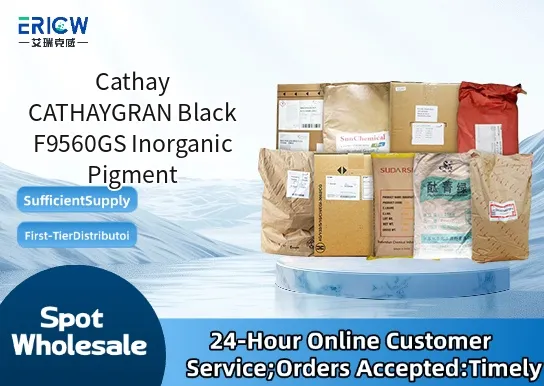
Highly stable iron-based black pigment with excellent thermal stability up to 800 °C in air.
Outstanding UV resistance and weatherfastness, suitable for long-term outdoor exposure.
Low oil absorption (< 25 g/100 g) enabling high loading in polymer and coating systems without viscosity penalty.
Non-toxic, heavy-metal-free formulation compliant with REACH and RoHS directives.
Consistent particle size distribution ensuring uniform dispersion and optimal blackness (high ΔE contrast).
Automotive coatings including basecoats, clearcoats, and plastic trim finishes.
Engineering thermoplastics such as polyamide (PA), polypropylene (PP), and polyethylene terephthalate (PET).
Architectural and industrial solvent- and water-based paints.
Ceramic glazes and vitreous enamel applications requiring high-temperature stability.
Construction materials including concrete colorants and roofing granules.
| Chemical Type | Complex Iron Oxide (Fe₃O₄–Fe₂O₃ mixed spinel) |
| Product Form | Free-flowing dry powder |
| Appearance | Jet-black granular powder |
| Primary Applications | Coatings, plastics, ceramics, construction materials |
| Key Features | Heat-stable, UV-resistant, non-toxic, low oil absorption |
| Benefits | Color consistency, high tinting strength, excellent dispersibility |
| pH (10% aqueous slurry) | 6.5 – 7.5 |
| Volatile Matter (105 °C, 2 h) | ≤ 0.5 wt% |
Q1: What is the primary chemical composition of CATHAYGRAN Black F9560GS?
A: CATHAYGRAN Black F9560GS is a high-performance inorganic black pigment based on a complex mixed-metal oxide system, engineered for thermal and chemical stability. It does not contain elemental carbon or organic dyes, distinguishing it from carbon blacks and organic pigments.
Q2: Is this pigment suitable for use in food-contact plastics?
A: Yes — CATHAYGRAN Black F9560GS is formulated to meet general requirements for pigments used in food-contact polymeric materials. It is non-leaching under typical processing and end-use conditions, and its inorganic nature supports compliance with major global food-contact frameworks when incorporated into approved resin systems.
Q3: How does F9560GS perform under high-temperature processing, such as injection molding or extrusion?
A: This pigment exhibits excellent thermal stability, retaining its color strength and integrity at temperatures commonly encountered in polymer processing — including up to 300°C for short residence times. It shows minimal degradation or gas evolution, making it well-suited for engineering thermoplastics and high-melt-index applications.
Q4: Can F9560GS be used in UV-stabilized outdoor applications?
A: Yes — as an inorganic pigment, F9560GS offers inherent UV resistance and lightfastness. When compounded into properly stabilized polymer systems, it delivers long-term color retention and minimal chalking or fading under prolonged outdoor exposure.
Q5: What is the typical dosage range for achieving full opacity and consistent blackness in polyolefins?
A: Dosage depends on formulation requirements and desired shade depth, but full opacity in polyolefins is generally achieved at low concentrations — typically ranging from 0.1% to 2% by weight. Optimal dispersion and masterbatch dilution ratios should be confirmed through application-specific trials.
Contact With Us:
E-mail: wangxingqiang@ericwchem.com
Have a Questions? Call Us:
Add:
Building A1, Jiete Industrial Park, Huangpu District, Guangzhou City, Guangdong Province, China