English
 Español
 tiếng việt
 русский
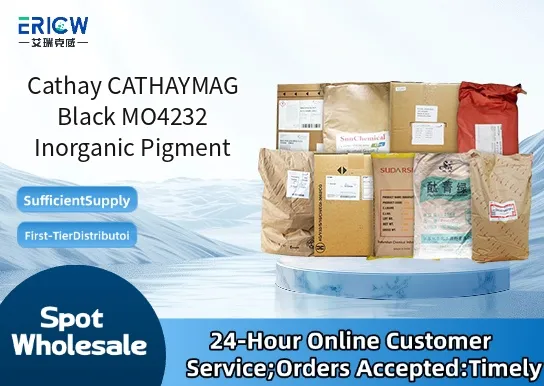
High thermal stability up to 800 °C, maintaining color integrity in high-temperature processing.
Excellent UV resistance and lightfastness, ensuring long-term color retention outdoors.
Non-toxic and heavy-metal-free formulation compliant with global regulatory standards (RoHS, REACH).
Superior dispersion stability in aqueous and solvent-based systems without flocculation.
Consistent particle size distribution for uniform tinting strength and minimal batch-to-batch variation.
Ceramic glazes and underglaze decorations requiring high-firing stability.
Architectural coatings and facade paints exposed to harsh weather conditions.
Plastic coloration for automotive interior components and engineering thermoplastics.
Specialty inks for heat-transfer printing and industrial coding applications.
Construction materials including colored concrete, terrazzo, and precast elements.
| Chemical Type | Mixed metal oxide (Fe–Mn–Cr spinel) |
| Product Form | Fine dry powder |
| Appearance | Jet-black granular powder with matte finish |
| Primary Applications | Ceramics, architectural coatings, plastics, construction materials |
| Key Features | Thermal stability, UV resistance, chemical inertness, low oil absorption |
| Benefits | Reduced pigment loading, improved opacity, enhanced weatherability |
| pH (10% aqueous slurry) | 6.5–7.5 |
| Volatile Matter (105 °C, 2 hrs) | ≤0.5 wt% |
Q1: What is the primary chemical composition of CATHAYMAG Black MO4232?
A: CATHAYMAG Black MO4232 is a spinel-type mixed metal oxide pigment, predominantly based on iron and manganese oxides, engineered for high thermal stability and chemical inertness in demanding industrial applications.
Q2: Is this pigment suitable for use in high-temperature polymer processing, such as polypropylene or engineering thermoplastics?
A: Yes — MO4232 is specifically formulated to withstand processing temperatures up to 300°C and above, making it well-suited for coloration of polyolefins, polyesters, and other engineering plastics without significant thermal degradation or color shift.
Q3: How does MO4232 compare to carbon black in terms of UV stability and electrical conductivity?
A: Unlike carbon black, MO4232 is non-conductive and exhibits superior UV resistance without promoting polymer photo-oxidation. It delivers consistent jet-black hue under prolonged outdoor exposure while avoiding the conductivity-related limitations of carbon-based alternatives.
Q4: Can MO4232 be dispersed in aqueous systems for coatings or inks?
A: Yes — with appropriate surface treatment and dispersant selection, MO4232 achieves stable dispersion in both water-based and solvent-based systems. Its inorganic nature ensures compatibility across a broad pH range and resistance to hydrolysis.
Q5: What is the typical dosage range required to achieve full opacity and deep black shade in plastic compounds?
A: Dosage depends on formulation requirements and desired shade intensity, but MO4232 is typically used at low concentrations — generally ranging from 0.1% to 2% by weight — due to its high tinting strength and excellent hiding power.
Contact With Us:
E-mail: wangxingqiang@ericwchem.com
Have a Questions? Call Us:
Add:
Building A1, Jiete Industrial Park, Huangpu District, Guangzhou City, Guangdong Province, China