English
 Español
 tiếng việt
 русский
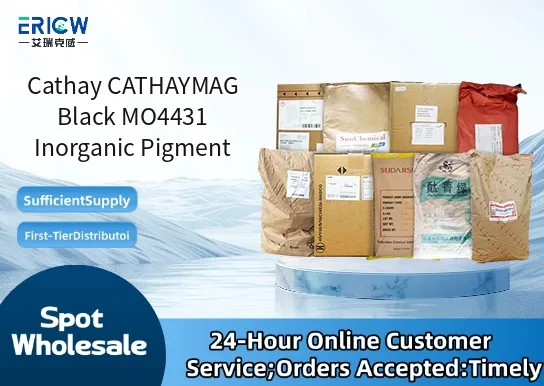
Highly stable spinel-type black pigment with excellent thermal stability up to 1000 °C in oxidizing atmospheres.
Outstanding UV resistance and lightfastness, ensuring long-term color retention in outdoor applications.
Low oil absorption and good dispersibility in both aqueous and solvent-based systems.
Non-toxic, heavy-metal-free formulation compliant with RoHS and REACH regulations.
Chemically inert—resistant to acids, alkalis, and common organic solvents.
Ceramic glazes and underglaze decorations for sanitaryware and tableware.
High-temperature coatings for industrial furnaces, exhaust components, and architectural metal cladding.
Colorants in refractory bricks, fireproofing mortars, and heat-resistant concrete.
Pigmentation of engineering plastics requiring thermal stability above 280 °C (e.g., PEEK, PEI, PPS).
Specialty inks for glass and ceramic decoration firing at 600–900 °C.
| Chemical Type | Cobalt-Chromium-Iron Spinel (CoCrFeO₄-based) |
| Product Form | Fine, free-flowing powder |
| Appearance | Jet-black granular powder |
| Primary Applications | Ceramics, high-temp coatings, refractories, engineering plastics |
| Key Features | Thermal stability, UV resistance, chemical inertness, heavy-metal-free |
| Particle Size (D₅₀) | 0.8–1.2 μm |
| Bulk Density | 2.8–3.2 g/cm³ |
| pH (5% aqueous slurry) | 6.5–7.5 |
Q1: What is the primary chemical composition of CATHAYMAG Black MO4431?
A: CATHAYMAG Black MO4431 is a high-performance inorganic black pigment based on a complex metal oxide spinel structure, engineered for thermal and chemical stability. It does not contain heavy metals such as lead, cadmium, or mercury, and is formulated to meet modern regulatory expectations for industrial pigments.
Q2: Is this pigment suitable for high-temperature polymer processing, such as polypropylene or engineering plastics?
A: Yes — MO4431 exhibits excellent thermal stability and is widely used in thermoplastics processing up to 300°C, including injection molding and extrusion of polyolefins and engineering resins. Its robust crystal structure helps retain color strength and dispersion integrity under elevated shear and temperature conditions.
Q3: How does MO4431 compare to carbon black in terms of UV resistance and weathering performance?
A: Unlike organic or carbon-based blacks, MO4431 offers inherent UV inertness and superior long-term weathering resistance due to its fully inorganic nature. It shows no significant fading or chalking under prolonged outdoor exposure and is preferred in applications where photostability and color consistency are critical.
Q4: Can MO4431 be used in food-contact plastic compounds?
A: While MO4431 is free from regulated heavy metals and complies with general purity requirements for pigments in plastics, formal food-contact approval depends on final formulation, processing conditions, and regional regulatory assessment. Users must conduct full compliance verification per applicable jurisdiction (e.g., FDA 21 CFR, EU Framework Regulation) before use in food-contact applications.
Q5: What is the recommended method for dispersing MO4431 in polymer systems?
A: Optimal dispersion is achieved using high-shear compounding techniques — such as twin-screw extrusion or internal mixing — often with carrier resins or compatibilizers. Pre-dispersed masterbatches are also commonly employed to ensure uniform distribution and maximize color development without agglomeration.
Contact With Us:
E-mail: wangxingqiang@ericwchem.com
Have a Questions? Call Us:
Add:
Building A1, Jiete Industrial Park, Huangpu District, Guangzhou City, Guangdong Province, China