English
 Español
 tiếng việt
 русский
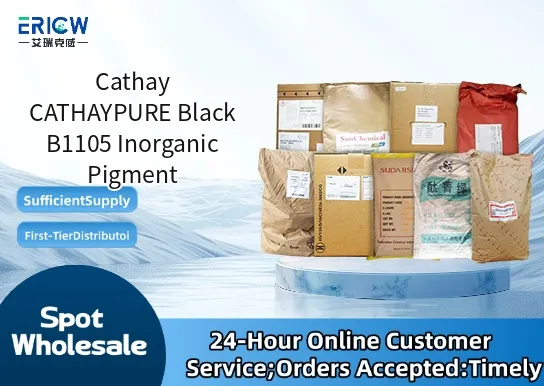
High thermal stability up to 800 °C, enabling use in high-temperature ceramic and enamel applications.
Excellent lightfastness and weather resistance, maintaining color integrity under prolonged UV exposure.
Chemically inert and acid/alkali resistant, ensuring compatibility with aggressive industrial media.
Consistent particle size distribution for uniform dispersion and optimal opacity in demanding matrices.
Non-toxic, heavy-metal-free formulation compliant with global regulatory standards including RoHS and REACH.
Ceramic glazes and frits for tableware, sanitaryware, and architectural tiles.
High-performance enamels for domestic appliances and industrial metal coatings.
Colorants in heat-resistant plastics for automotive under-hood components.
Pigmentation of refractory materials and fireproofing composites.
Functional black pigment in specialty inks for industrial coding and marking systems.
| Chemical Type | Mixed Metal Oxide (Fe–Mn–Cr spinel-based) |
| Product Form | Fine dry powder |
| Appearance | Jet-black free-flowing powder |
| Primary Applications | Ceramics, enamels, high-temp plastics, refractories |
| Key Features | Thermal stability, UV resistance, chemical inertness, non-toxicity |
| Benefits | Color consistency, low dosage requirement, minimal batch variation |
| Storage Conditions | Keep in cool, dry, well-ventilated area away from moisture |
| Shelf Life | 36 months from date of manufacture under recommended storage |
Q1: What is the primary chemical composition of CATHAYPURE Black B1105?
A: CATHAYPURE Black B1105 is a high-performance inorganic black pigment based on mixed metal oxides, engineered for thermal and chemical stability. Its exact composition is proprietary, but it contains no elemental carbon or organic dyes, distinguishing it from carbon blacks and organic pigments.
Q2: Is this pigment suitable for use in food-contact plastics?
A: Yes — CATHAYPURE Black B1105 is formulated to meet general requirements for pigments used in food-contact polymer applications, including compliance with global regulatory expectations for heavy metals and extractables. Final regulatory suitability depends on the specific end-use application, processing conditions, and regional food contact legislation.
Q3: How does B1105 perform under high-temperature processing, such as injection molding or extrusion?
A: B1105 exhibits excellent thermal stability and retains its color integrity and dispersion characteristics at temperatures commonly encountered in polyolefin, engineering plastic, and thermoset processing — typically up to 300 °C and beyond, depending on residence time and atmosphere.
Q4: What types of polymer systems is B1105 most compatible with?
A: B1105 demonstrates broad compatibility across polyolefins (PP, PE), PVC, ABS, PS, and engineering resins such as PA and PBT. It is also widely used in masterbatch formulations due to its good dispersibility and low dusting tendency.
Q5: What is the typical dosage range when using B1105 in plastic coloration?
A: Dosage depends on the required opacity, shade depth, and base polymer, but B1105 is generally effective at low concentrations — typically ranging from 0.1% to 2% by weight in final compounds. Its high tinting strength allows for efficient usage without compromising mechanical properties.
Contact With Us:
E-mail: wangxingqiang@ericwchem.com
Have a Questions? Call Us:
Add:
Building A1, Jiete Industrial Park, Huangpu District, Guangzhou City, Guangdong Province, China