English
 Español
 tiếng việt
 русский
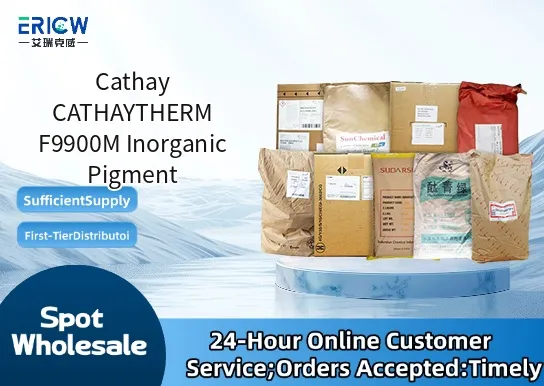
Exceptional thermal stability up to 1200°C, maintaining color integrity under high-temperature processing conditions.
Chemically inert composition resistant to acids, alkalis, and solvents, ensuring long-term performance in aggressive environments.
Non-toxic, heavy-metal-free formulation compliant with global regulatory standards including REACH and RoHS.
High opacity and excellent lightfastness (ASTM Level 8), minimizing fading under prolonged UV exposure.
Uniform particle size distribution enabling smooth dispersion and consistent batch-to-batch color reproducibility.
Ceramic glazes and frits for architectural tiles and sanitaryware.
High-temperature coatings for industrial furnaces, exhaust systems, and heat-resistant appliances.
Coloration of refractory materials including firebricks, castables, and monolithic linings.
Pigmentation of glass enamels and vitreous coatings requiring stable hue at firing temperatures.
Functional coloring agent in technical plastics processed above 300°C (e.g., polyimide and PEEK compounds).
| Chemical Type | Mixed-Metal Oxide (Spinel-based) |
| Product Form | Fine, free-flowing powder |
| Appearance | Dark gray to black granular powder |
| Primary Applications | High-temperature ceramics, refractories, and heat-resistant coatings |
| Key Features | Thermal stability, chemical inertness, non-volatility, UV resistance |
| Benefits | Color consistency at elevated temperatures, low volatility loss, minimal sintering impact |
| Density (g/cm³) | 4.2 – 4.6 |
| Particle Size (D50, μm) | 1.8 – 2.5 |
Q1: What is the primary thermal stability range for CATHAYTHERM F9900M?
A: CATHAYTHERM F9900M is engineered for high-temperature applications and maintains color integrity and chemical stability under prolonged exposure to elevated processing temperatures typically encountered in thermoplastics and high-performance coatings.
Q2: Is this pigment suitable for food-contact plastics?
A: CATHAYTHERM F9900M is an inorganic pigment designed for technical performance rather than direct food-contact compliance. Formulators must conduct full regulatory assessment—including migration testing and regulatory review—based on final application, matrix, and regional requirements before use in food-contact materials.
Q3: How does F9900M compare to organic pigments in terms of UV resistance?
A: As an inorganic pigment, F9900M offers inherently superior UV stability and weatherfastness compared to most organic pigments, making it well-suited for outdoor applications where long-term color retention and resistance to photodegradation are critical.
Q4: What dispersion methods are recommended for optimal performance?
A: For best results, pre-dispersion using high-shear mixing or extrusion compounding is recommended. Compatibility with common dispersing aids and carrier resins should be verified during formulation development to ensure uniform distribution and maximum color strength.
Q5: Can F9900M be used in aqueous systems?
A: While primarily formulated for polymer melts and solvent-based systems, F9900M may be adapted for aqueous dispersions with appropriate surface treatment and stabilization—however, performance and stability must be validated experimentally for each specific water-based formulation.
Contact With Us:
E-mail: wangxingqiang@ericwchem.com
Have a Questions? Call Us:
Add:
Building A1, Jiete Industrial Park, Huangpu District, Guangzhou City, Guangdong Province, China