English
 Español
 tiếng việt
 русский
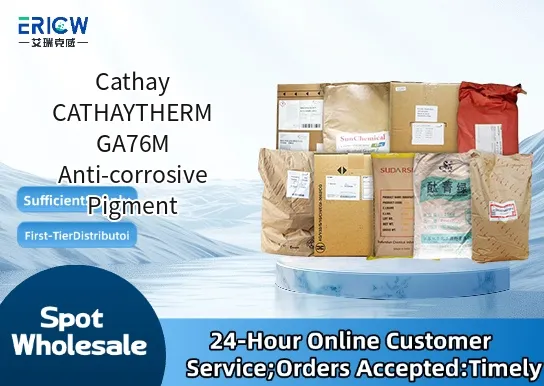
Advanced micaceous iron oxide (MIO)-based formulation providing exceptional barrier protection against moisture and aggressive ions.
High aspect-ratio lamellar structure ensures optimal overlapping in coating films, enhancing impermeability and long-term corrosion resistance.
Chemically inert and compatible with epoxy, polyurethane, and alkyd resin systems for versatile primer and intermediate coat integration.
Low heavy metal content meeting RoHS and REACH compliance requirements for sustainable industrial use.
Improved pigment dispersion stability reduces settling and improves batch-to-batch consistency in high-solids coatings.
Marine and offshore structures including ship hulls, decks, and offshore platforms.
Oil and gas infrastructure such as pipelines, storage tanks, and process equipment.
Heavy-duty industrial maintenance coatings for steel bridges and power generation facilities.
Automotive underbody and chassis primers requiring durable rust inhibition.
Railway rolling stock and freight wagons exposed to harsh environmental conditions.
| Chemical Type | Micaceous Iron Oxide (MIO), surface-treated |
| Product Form | Fine, free-flowing powder |
| Appearance | Dark grey to metallic grey, non-dusting |
| Primary Applications | Anti-corrosive primers and intermediate coats for protective coatings |
| Key Features | Lamellar morphology, high density, low oil absorption |
| Benefits | Extended service life, reduced maintenance frequency, enhanced film integrity |
| Storage Stability | Stable under dry, cool conditions (≤30°C, RH < 60%) |
| Regulatory Compliance | REACH registered; RoHS compliant;不含铅、镉、汞、六价铬 |
Q1: What is the primary mechanism of corrosion inhibition for CATHAYTHERM GA76M?
A: CATHAYTHERM GA76M functions primarily through a combination of barrier enhancement and active passivation—its unique inorganic composite structure helps form a protective interface at the metal-pigment boundary, reducing electrochemical activity and slowing down anodic dissolution.
Q2: Is GA76M compatible with water-based coating systems?
A: Yes, GA76M is formulated for good dispersibility in both solvent-borne and water-based systems, including acrylic, epoxy, and polyurethane dispersions. Optimal performance typically requires appropriate wetting agents and high-shear dispersion during mill-base preparation.
Q3: How does GA76M compare to traditional zinc phosphate or strontium chromate pigments in terms of environmental profile?
A: Unlike chromate-based pigments, GA76M contains no hexavalent chromium or other heavily restricted heavy metals. It is designed as a more sustainable alternative to conventional anti-corrosive pigments, aligning with evolving regulatory expectations for low-toxicity, non-bioaccumulative additives.
Q4: What is the recommended dosage range for optimal anti-corrosive performance?
A: Dosage depends on formulation type, target corrosion resistance level, and film thickness—but GA76M is typically used at low concentrations, generally ranging from 0.1% to 2% by weight of total solids. Formulators are advised to conduct application-specific optimization trials.
Q5: Can GA76M be used in high-build or thick-film industrial coatings?
A: Yes—GA76M maintains good compatibility and stability in high-solids and high-build systems, including intumescent and heavy-duty protective coatings. Its particle morphology supports uniform distribution without significant settling or rheology disruption, even in extended storage conditions.
Contact With Us:
E-mail: wangxingqiang@ericwchem.com
Have a Questions? Call Us:
Add:
Building A1, Jiete Industrial Park, Huangpu District, Guangzhou City, Guangdong Province, China