English
 Español
 tiếng việt
 русский
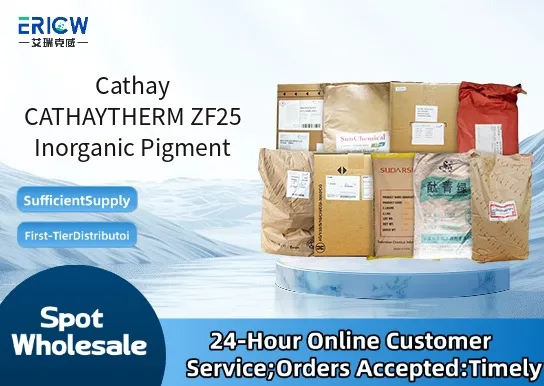
High thermal stability up to 1000 °C in oxidizing atmospheres.
Excellent chemical resistance against acids, alkalis, and solvents.
Non-toxic, heavy-metal-free composition compliant with RoHS and REACH.
Consistent particle size distribution ensuring uniform dispersion and color development.
Low oil absorption for improved formulation efficiency in high-solids coatings and ceramics.
High-temperature ceramic glazes and kiln-fired tiles.
Thermal barrier coatings for aerospace and industrial furnace components.
Fire-resistant intumescent paints and passive fire protection systems.
Colored refractory mortars and castables for metallurgical linings.
Heat-stable inks for glass and metal decoration requiring firing above 600 °C.
| Chemical Type | Mixed-metal oxide (Zinc-Ferrite based) |
| Product Form | Free-flowing fine powder |
| Appearance | Dark gray to black granular powder |
| Primary Applications | Ceramics, refractories, high-temp coatings, fire protection materials |
| Key Features | Thermal stability, inertness, non-volatility, UV stability |
| Benefits | Color retention at elevated temperatures, low sintering reactivity, compatibility with silicate matrices |
| Density (g/cm³) | 4.8–5.2 |
| Particle Size (D50, µm) | 1.5–3.0 |
Q1: What is the primary application field for CATHAYTHERM ZF25?
A: CATHAYTHERM ZF25 is specifically engineered for high-temperature applications in thermoset and thermoplastic polymers, including engineering plastics used in automotive under-hood components, electrical insulation parts, and heat-resistant coatings where long-term thermal stability and color retention are critical.
Q2: How does ZF25 perform under prolonged thermal exposure?
A: ZF25 exhibits excellent thermal stability, maintaining its chromatic integrity and dispersion characteristics at continuous service temperatures up to approximately 350 °C in inert or low-oxygen environments. Color shift and degradation are minimized compared to conventional organic pigments, making it suitable for demanding processing conditions such as injection molding and compression sintering.
Q3: Is ZF25 compatible with halogen-free flame-retardant polymer systems?
A: Yes, ZF25 is chemically inert and non-reactive toward common halogen-free flame retardants (e.g., metal hydroxides, phosphinates, and nitrogen-based systems), supporting stable coloration without compromising flame-retardant performance or causing catalytic decomposition during processing.
Q4: What is the typical dosage range for achieving optimal color strength and thermal stability?
A: Dosage depends on formulation requirements and substrate transparency, but ZF25 is typically used at low concentrations—generally ranging from 0.1% to 2% by weight—to deliver strong, consistent coloration while preserving mechanical and thermal properties of the host matrix.
Q5: Does ZF25 require surface treatment for optimal dispersion in polymer melts?
A: While ZF25 is supplied in a readily dispersible form, enhanced compatibility and uniform distribution in high-viscosity polymer melts can be achieved through optional in-situ coupling agents or pre-compounding steps—particularly in precision-engineered thermoplastics where agglomerate formation must be strictly avoided.
Contact With Us:
E-mail: wangxingqiang@ericwchem.com
Have a Questions? Call Us:
Add:
Building A1, Jiete Industrial Park, Huangpu District, Guangzhou City, Guangdong Province, China