English
 Español
 tiếng việt
 русский
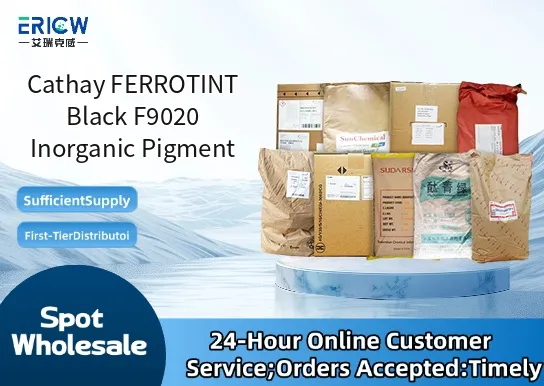
Highly stable iron oxide-based black pigment with excellent lightfastness and weather resistance.
Non-toxic, heavy-metal-free formulation compliant with global environmental and safety standards.
Superior dispersion stability in aqueous and solvent-based systems without flocculation.
Consistent particle size distribution ensuring uniform color strength and batch-to-batch reproducibility.
Thermally stable up to 300°C, suitable for high-temperature processing applications.
Architectural and industrial coatings requiring durable, non-fading black coloration.
Cementitious products including concrete, mortar, and tile grouts.
Plastic masterbatches for polyolefins, PVC, and engineering thermoplastics.
Ceramic glazes and underglaze decorations for sanitaryware and tableware.
Printing inks for packaging and labeling where regulatory compliance is critical.
| Chemical Type | Iron Oxide (Fe₃O₄ / γ-Fe₂O₃ blend) |
| Product Form | Free-flowing dry powder |
| Appearance | Jet-black granular powder |
| Primary Applications | Coatings, construction materials, plastics, ceramics, inks |
| Key Features | Non-toxic, UV-stable, alkali-resistant, low oil absorption |
| Benefits | Reduced settling, enhanced tinting strength, RoHS & REACH compliant |
| pH (10% aqueous slurry) | 6.5 – 8.0 |
| Volatile Matter (105°C, 2 hrs) | ≤ 1.0 wt% |
Q1: What is the primary chemical composition of Cathay FERROTINT Black F9020?
A: Cathay FERROTINT Black F9020 is a high-performance inorganic black pigment based on complex iron oxide–manganese oxide spinel chemistry, engineered for thermal stability and UV resistance in demanding industrial applications.
Q2: Is this pigment suitable for use in plastics exposed to high processing temperatures?
A: Yes — F9020 exhibits excellent thermal stability and is routinely processed in polyolefins, engineering thermoplastics, and thermosets at standard extrusion and injection molding temperatures without significant color shift or degradation.
Q3: How does F9020 compare to carbon black in terms of dispersion behavior and jetness in polymer systems?
A: Unlike carbon black, F9020 offers inherently better dispersion stability in polar and non-polar matrices due to its surface chemistry and particle morphology. While jetness is slightly lower than premium carbon blacks, it delivers superior bluish-black undertones and avoids conductivity or dusting issues associated with carbon-based alternatives.
Q4: Can F9020 be used in coatings requiring weatherfastness and chalk resistance?
A: Yes — as an inorganic pigment, F9020 provides outstanding resistance to UV radiation, moisture, and atmospheric pollutants, making it well-suited for exterior architectural coatings, coil coatings, and industrial maintenance finishes where long-term color retention is critical.
Q5: What are typical dosage guidelines when incorporating F9020 into formulations?
A: Dosage depends on the desired opacity, tinting strength, and substrate. In most polymer and coating systems, effective loading generally ranges from 0.1% to 2% by weight — with optimal results achieved through application-specific optimization and dispersion protocol validation.
Contact With Us:
E-mail: wangxingqiang@ericwchem.com
Have a Questions? Call Us:
Add:
Building A1, Jiete Industrial Park, Huangpu District, Guangzhou City, Guangdong Province, China