English
 Español
 tiếng việt
 русский
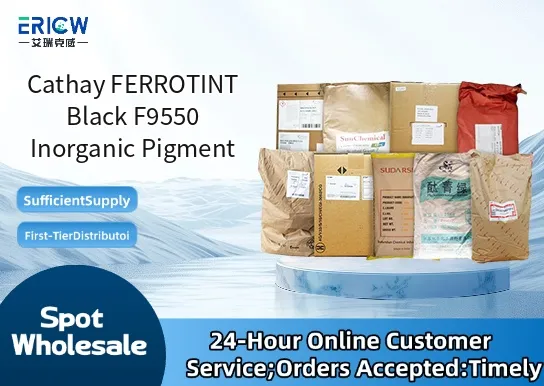
High thermal stability up to 600°C, suitable for high-temperature processing environments.
Excellent UV resistance and lightfastness, ensuring long-term color retention in outdoor applications.
Low oil absorption (<35 g/100g), enabling efficient dispersion and improved rheology in resin systems.
Non-toxic and heavy-metal-free formulation, compliant with RoHS and REACH regulatory requirements.
Consistent particle size distribution for uniform tinting strength and minimal batch-to-batch variation.
Automotive coatings including OEM and refinish basecoats and clearcoats.
Industrial maintenance paints for bridges, pipelines, and structural steel.
Plastic coloration for engineering thermoplastics such as polyamide and polypropylene.
Architectural coatings requiring weatherability and alkali resistance.
High-performance powder coatings for metal furniture and appliance finishes.
| Chemical Type | Iron oxide-based complex inorganic colored pigment (spinel structure) |
| Product Form | Fine dry powder |
| Appearance | Jet-black free-flowing powder |
| Primary Applications | Coatings, plastics, construction materials |
| Key Features | Thermal stability, UV resistance, chemical inertness |
| Benefits | Color consistency, low volatility, non-hazardous handling |
| Density (g/cm³) | 4.8–5.1 |
| Particle Size (D50, µm) | 0.8–1.2 |
Q1: What is the primary chemical composition of Cathay FERROTINT Black F9550?
A: Cathay FERROTINT Black F9550 is a high-performance inorganic black pigment based on complex iron oxide–manganese oxide spinel chemistry, engineered for thermal stability and UV resistance in demanding applications.
Q2: Is this pigment suitable for use in food-contact plastics or coatings?
A: While F9550 complies with general heavy metal limits for industrial pigments, it is not pre-qualified for direct food-contact applications under global regulatory frameworks. Customers must conduct full formulation-level compliance testing per applicable regional requirements before use in food-contact systems.
Q3: How does F9550 compare to carbon black in terms of dispersion and heat stability?
A: Unlike organic carbon blacks, F9550 offers superior thermal stability—remaining inert up to 800 °C—and eliminates concerns about VOC generation during high-temperature processing. Its inorganic nature also provides excellent dispersion stability in polar polymer matrices without requiring extensive surface treatment.
Q4: What types of resins or binders show optimal compatibility with this pigment?
A: F9550 demonstrates broad compatibility with engineering thermoplastics (e.g., polyamide, PBT, PC), thermosets (epoxy, phenolic), and water-based and solvent-based industrial coatings. Performance may vary depending on resin polarity and processing conditions, so preliminary compatibility testing is recommended.
Q5: What is the typical dosage range when using F9550 in plastic coloration?
A: Dosage depends on the desired shade depth and substrate opacity, but F9550 is typically used at low concentrations—generally ranging from 0.1% to 2% by weight—to achieve deep, neutral black tones with excellent hiding power and minimal impact on mechanical properties.
Contact With Us:
E-mail: wangxingqiang@ericwchem.com
Have a Questions? Call Us:
Add:
Building A1, Jiete Industrial Park, Huangpu District, Guangzhou City, Guangdong Province, China