English
 Español
 tiếng việt
 русский
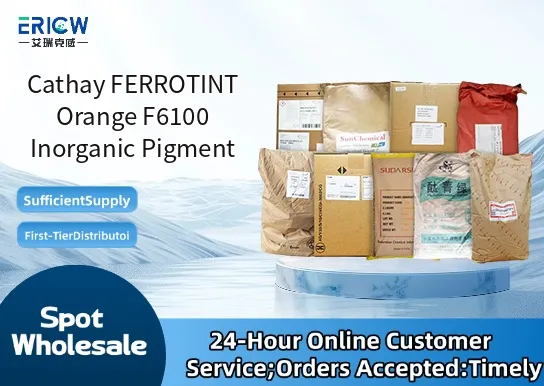
High thermal stability up to 800 °C, suitable for high-temperature processing including ceramic glazes and refractory coatings.
Excellent lightfastness and weather resistance, maintaining color integrity under prolonged UV exposure and outdoor conditions.
Non-toxic and heavy-metal-free formulation compliant with EN 71-3 and RoHS directives for safe use in consumer-facing applications.
Strong tinting strength and consistent batch-to-batch color reproducibility ensured by controlled calcination and particle size distribution.
Good dispersibility in aqueous and solvent-based systems, facilitating efficient incorporation into paints, plastics, and construction materials.
Ceramic glazes and underglaze decorations for tableware and architectural tiles.
Architectural concrete and precast concrete products requiring durable, fade-resistant orange hues.
Industrial coatings for metal and plastic substrates exposed to harsh environmental conditions.
Fire-resistant intumescent coatings where thermal stability and non-volatility are critical.
Colored glass formulations for decorative and functional glazing applications.
| Chemical Type | Complex mixed-metal oxide (Fe–Cr–Zn spinel-based) |
| Product Form | Free-flowing dry powder |
| Appearance | Uniform orange-red granular powder |
| Primary Applications | Ceramics, architectural concrete, industrial coatings, refractory materials |
| Key Features | Thermal stability, UV resistance, non-toxicity, low oil absorption |
| Benefits | Color consistency, minimal migration, compatibility with alkaline matrices |
| Density (g/cm³) | 4.2 – 4.5 |
| Particle Size (D50, µm) | 1.8 – 2.2 |
Q1: What is the primary chemical composition of Cathay FERROTINT Orange F6100?
A: Cathay FERROTINT Orange F6100 is a high-performance inorganic pigment based on modified iron oxide, engineered to deliver strong orange hue strength, excellent thermal stability, and consistent dispersion behavior in demanding industrial applications.
Q2: Is this pigment suitable for use in heat-sensitive polymer systems such as polyolefins or PVC?
A: Yes — F6100 exhibits good thermal stability up to typical processing temperatures for polyolefins, PVC, and engineering thermoplastics. It maintains color integrity during extrusion and injection molding without significant degradation or gas evolution.
Q3: How does F6100 compare to organic orange pigments in terms of weather resistance and lightfastness?
A: As an inorganic pigment, F6100 offers significantly superior lightfastness, UV resistance, and long-term outdoor durability compared to most organic orange alternatives — making it preferred for exterior coatings, architectural concrete, and agricultural films where color retention is critical.
Q4: What are the recommended dispersion methods for optimal performance in liquid systems?
A: For liquid coatings and inks, pre-dispersion using high-shear mixing or bead milling is recommended. The pigment responds well to conventional dispersants used with iron oxide-based systems; compatibility testing with specific resin and solvent combinations is advised to ensure stable rheology and color development.
Q5: Can F6100 be used in food-contact or pharmaceutical packaging applications?
A: While F6100 is manufactured under strict quality control and complies with general heavy metal limits for industrial pigments, it is not pre-qualified for direct food-contact applications. Customers requiring regulatory compliance for such uses should consult their regulatory team and request full documentation for evaluation against applicable regional requirements.
Contact With Us:
E-mail: wangxingqiang@ericwchem.com
Have a Questions? Call Us:
Add:
Building A1, Jiete Industrial Park, Huangpu District, Guangzhou City, Guangdong Province, China