English
 Español
 tiếng việt
 русский
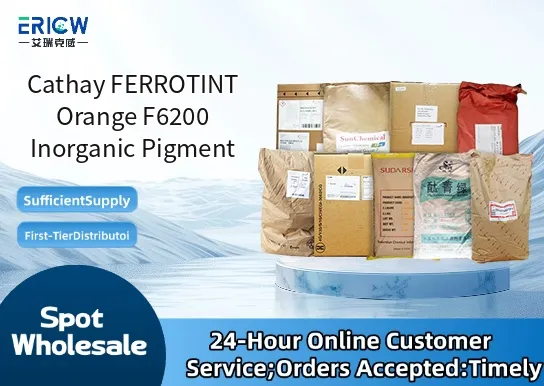
High thermal stability up to 800 °C, suitable for high-temperature ceramic and refractory applications.
Excellent lightfastness and weather resistance, ensuring long-term color retention in outdoor exposure.
Non-toxic, heavy-metal-free formulation compliant with global regulatory standards including EN 71-3 and RoHS.
Strong tinting strength and consistent batch-to-batch color reproducibility (ΔE < 0.8 under D65 illumination).
Low oil absorption (< 22 g/100 g) enabling high loading in solvent-based and water-based systems without viscosity penalty.
Ceramic glazes and underglaze decorations for sanitaryware and tableware.
Architectural and industrial coatings requiring durable orange hues.
Plastic coloration for polyolefins, PVC, and engineering thermoplastics (e.g., PP, ABS).
Construction materials including concrete pavers, roof tiles, and fiber-cement boards.
Specialty inks for heat-set offset and ceramic decal printing.
| Chemical Type | Complex iron oxide-based inorganic pigment (α-Fe₂O₃ doped with Zn, Al, Si) |
| Product Form | Free-flowing dry powder |
| Appearance | Uniform bright orange-red powder |
| Primary Applications | Ceramics, coatings, plastics, construction materials |
| Key Features | Thermal stability, lightfastness, non-toxicity, low oil absorption |
| Particle Size (D50) | 0.8–1.2 μm |
| pH (5% aqueous slurry) | 6.5–7.5 |
| Volatile Matter (105 °C, 2 h) | ≤ 0.5 wt% |
Q1: What is the primary chemical composition of Cathay FERROTINT Orange F6200?
A: Cathay FERROTINT Orange F6200 is an iron oxide-based inorganic pigment, primarily composed of alpha-iron oxide (α-Fe₂O₃) with controlled crystallinity and particle morphology to deliver consistent orange hue and high thermal stability.
Q2: Is this pigment suitable for use in food-contact plastics or coatings?
A: Cathay FERROTINT Orange F6200 is not pre-certified for direct food-contact applications. It may be considered for indirect food-contact uses where regulatory compliance is verified by the end-formulator — always confirm suitability against applicable regional requirements and perform required migration testing.
Q3: How does F6200 compare to organic orange pigments in terms of heat stability?
A: As an inorganic iron oxide pigment, F6200 offers significantly higher thermal stability than most organic orange pigments — it remains stable during standard polymer processing (e.g., extrusion, injection molding) and retains color integrity at temperatures exceeding 300 °C.
Q4: Can F6200 be dispersed in water-based systems without surface treatment?
A: While F6200 is inherently hydrophilic due to its iron oxide nature, optimal dispersion in water-based paints or inks typically benefits from compatible dispersants or mild pH adjustment — untreated addition may lead to reduced stability or sedimentation over time.
Q5: What is the typical dosage range when using F6200 in architectural coatings?
A: Dosage depends on desired opacity and shade intensity, but F6200 is generally used at low concentrations — typically ranging from 0.1% to 2% by weight relative to total formulation — to achieve strong chromatic performance while maintaining cost efficiency and rheological balance.
Contact With Us:
E-mail: wangxingqiang@ericwchem.com
Have a Questions? Call Us:
Add:
Building A1, Jiete Industrial Park, Huangpu District, Guangzhou City, Guangdong Province, China