English
 Español
 tiếng việt
 русский
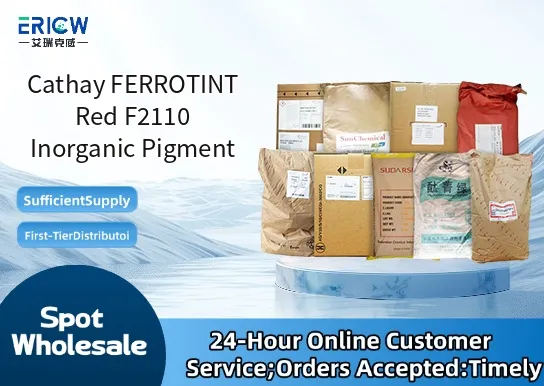
High thermal stability up to 800 °C, suitable for high-temperature ceramic and refractory applications.
Excellent lightfastness and weather resistance, maintaining color integrity under prolonged UV exposure.
Non-toxic composition compliant with global regulatory standards including EN 71-3 and RoHS.
Consistent particle size distribution ensuring uniform dispersion and optimal tinting strength.
Low oil absorption for efficient incorporation into solvent-based and water-based systems.
Ceramic glazes and underglaze decorations for tableware and architectural tiles.
High-performance refractory coatings in metallurgical and furnace linings.
Colorants for construction materials including concrete, stucco, and fiber-cement boards.
Pigmentation of inorganic paints and silicate-based façade coatings.
Functional fillers in fire-resistant intumescent coatings and specialty plasters.
| Chemical Type | Iron oxide-based complex inorganic colored pigment (CICP) |
| Product Form | Free-flowing fine powder |
| Appearance | Brilliant reddish-brown powder |
| Primary Applications | Ceramics, refractories, construction materials, inorganic coatings |
| Key Features | Thermal stability, UV resistance, alkali resistance, non-volatility |
| Benefits | Color consistency, low migration, minimal impact on matrix properties |
| Storage Conditions | Store in dry, well-ventilated area; protect from moisture and direct sunlight |
| Regulatory Compliance | REACH registered; compliant with ISO 8781-1 for pigment classification |
Q1: What is the primary chemical composition of Cathay FERROTINT Red F2110?
A: Cathay FERROTINT Red F2110 is an iron oxide-based inorganic pigment, primarily composed of hematite (α-Fe₂O₃), engineered for high color strength, thermal stability, and UV resistance.
Q2: Is this pigment suitable for use in food-contact plastics or coatings?
A: Cathay FERROTINT Red F2110 is not pre-approved for direct food-contact applications. Its suitability depends on final formulation compliance with applicable regional regulatory frameworks, and users must conduct full regulatory assessment including migration testing where required.
Q3: How does F2110 perform under high-temperature processing conditions?
A: As a thermally stable iron oxide pigment, F2110 maintains its color integrity and structural integrity during standard polymer processing operations, including extrusion and injection molding at temperatures up to approximately 300 °C.
Q4: Can F2110 be used in water-based systems such as architectural paints or industrial coatings?
A: Yes — F2110 exhibits good dispersibility and stability in both water-based and solvent-based systems when properly formulated with appropriate surfactants or dispersing agents.
Contact With Us:
E-mail: wangxingqiang@ericwchem.com
Have a Questions? Call Us:
Add:
Building A1, Jiete Industrial Park, Huangpu District, Guangzhou City, Guangdong Province, China