English
 Español
 tiếng việt
 русский
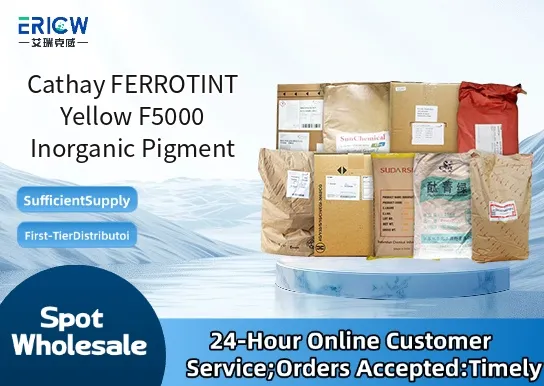
High thermal stability up to 800 °C, suitable for high-temperature ceramic and enamel applications.
Excellent chemical resistance against acids, alkalis, and solvents in industrial coating systems.
Consistent batch-to-batch colorimetric performance with low chromatic variation (ΔE < 0.8).
Non-toxic formulation compliant with EU REACH and RoHS directives for restricted substances.
Optimized particle size distribution for enhanced dispersion and opacity in aqueous and solvent-based media.
Ceramic glazes and underglaze decorations for tableware and architectural tiles.
High-performance industrial coatings for automotive OEM and refinish applications.
Fire-resistant intumescent paints and passive fire protection systems.
Colored concrete admixtures and precast architectural concrete elements.
Plastic coloration for engineering thermoplastics requiring heat stability (e.g., polyamide, PBT).
| Chemical Type | Complex iron oxide-based inorganic pigment (Fe₂O₃–ZnO–Cr₂O₃ system) |
| Product Form | Free-flowing dry powder |
| Appearance | Yellow-orange granular powder with uniform hue |
| Primary Applications | Ceramics, industrial coatings, plastics, construction materials |
| Key Features | Heat stable, lightfast, weather resistant, non-volatile |
| Benefits | Low migration, minimal dust generation, easy dispersion |
| Storage Conditions | Store in cool, dry, well-ventilated area away from moisture and direct sunlight |
| Regulatory Compliance | REACH registered; conforms to ISO 8781-1:2016 for pigment classification |
Q1: What is the primary chemical composition of Cathay FERROTINT Yellow F5000?
A: Cathay FERROTINT Yellow F5000 is an inorganic yellow pigment based on modified iron oxide-hydroxide (goethite-type) chemistry, engineered for enhanced thermal stability and consistent chroma in demanding processing environments.
Q2: Is this pigment suitable for use in food-contact plastics or coatings?
A: Cathay FERROTINT Yellow F5000 is designed for industrial and general-purpose applications. It is not certified for direct food-contact use unless specifically validated and approved by the end-user’s regulatory team under applicable regional frameworks (e.g., FDA 21 CFR or EU Plastics Regulation). Always conduct full compliance testing for regulated applications.
Q3: How does F5000 compare to organic yellow pigments in terms of heat stability?
A: As an inorganic pigment, F5000 offers significantly higher thermal stability than most organic yellows—typically retaining color integrity up to 250–300 °C during short-term processing such as extrusion or injection molding, making it well-suited for engineering thermoplastics and high-temperature coatings.
Q4: What dispersion methods are recommended for optimal performance in solvent-based systems?
A: For solvent-based coatings and inks, pre-wetting with compatible resins followed by high-shear dispersion (e.g., using a dissolver or bead mill) is recommended. The pigment’s surface treatment supports good wetting in medium-polarity media, but formulation-specific optimization is advised to achieve uniform tinting strength and gloss retention.
Contact With Us:
E-mail: wangxingqiang@ericwchem.com
Have a Questions? Call Us:
Add:
Building A1, Jiete Industrial Park, Huangpu District, Guangzhou City, Guangdong Province, China