English
 Español
 tiếng việt
 русский
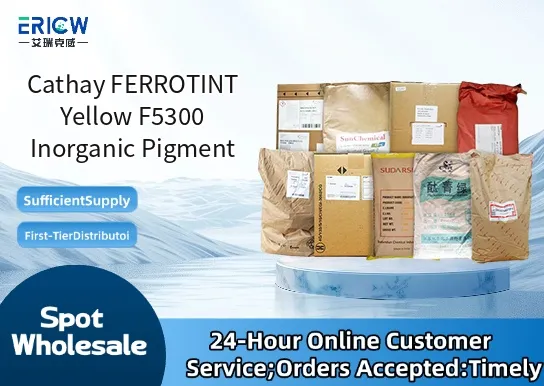
High thermal stability up to 600 °C, suitable for high-temperature processing applications.
Excellent lightfastness and weather resistance, maintaining color integrity under prolonged UV exposure.
Low solubility in water and organic solvents, ensuring minimal migration and bleeding in polymer matrices.
Non-toxic composition compliant with global regulatory standards including REACH and RoHS.
Consistent particle size distribution for uniform dispersion and optimal tinting strength.
Coloration of architectural coatings and exterior wall paints.
Pigmentation of engineering thermoplastics such as polypropylene (PP) and polyethylene (PE).
Functional coloring in ceramic glazes and vitreous enamel systems.
UV-stable pigment for powder coatings used in outdoor metal finishing.
Heat-resistant colorant in glass batch formulations for container and tableware production.
| Chemical Type | Iron oxide-based complex inorganic colored pigment (mixed metal oxide) |
| Product Form | Fine dry powder |
| Appearance | Yellow-brown free-flowing powder |
| Primary Applications | Coatings, plastics, ceramics, glass, construction materials |
| Key Features | Thermal stability, lightfastness, chemical inertness, non-volatility |
| Benefits | Long-term color retention, low VOC impact, compatibility with acidic and alkaline systems |
| Density (g/cm³) | 4.8–5.2 |
| Particle Size (D50, µm) | 0.8–1.2 |
Q1: What is the primary chemical composition of Cathay FERROTINT Yellow F5300?
A: Cathay FERROTINT Yellow F5300 is an inorganic yellow pigment based on a modified iron oxide–zinc oxide composite system, engineered for enhanced chroma and thermal stability without heavy metals or cadmium.
Q2: Is this pigment suitable for high-temperature processing applications such as engineering thermoplastics or powder coatings?
A: Yes — F5300 exhibits excellent thermal stability and retains its color integrity during melt processing up to approximately 300 °C, making it well-suited for polyamide, polyester, and epoxy-based systems requiring robust heat resistance.
Q3: How does F5300 compare to traditional lead chromate or cadmium-based yellow pigments in terms of regulatory compliance and environmental safety?
A: As a non-toxic, heavy-metal-free alternative, F5300 complies with major global restrictions on hazardous substances, including RoHS and REACH SVHC guidelines, and is widely accepted in markets where regulatory scrutiny of chromates and cadmium compounds is stringent.
Q4: Can F5300 be used in solvent-based industrial coatings and waterborne architectural paints?
A: Yes — F5300 demonstrates good dispersibility and compatibility in both polar solvent systems (e.g., xylene, butyl acetate) and aqueous dispersions, supporting stable color development across a broad range of coating chemistries.
Contact With Us:
E-mail: wangxingqiang@ericwchem.com
Have a Questions? Call Us:
Add:
Building A1, Jiete Industrial Park, Huangpu District, Guangzhou City, Guangdong Province, China