English
 Español
 tiếng việt
 русский
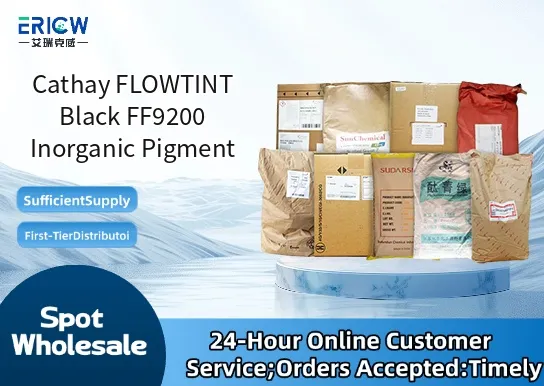
High thermal stability up to 800 °C, suitable for high-temperature processing environments.
Excellent UV resistance and lightfastness, ensuring long-term color retention in outdoor applications.
Low oil absorption (< 25 g/100 g), enabling efficient dispersion and improved formulation viscosity control.
Non-toxic and heavy-metal-free (compliant with EN 71-3 and RoHS directives).
Consistent particle size distribution for uniform tinting strength and minimal batch-to-batch variation.
Ceramic glazes and bodies for tableware, sanitaryware, and architectural tiles.
High-performance engineering plastics including polyamide (PA), polybutylene terephthalate (PBT), and polyphenylene sulfide (PPS).
Specialty coatings for automotive under-hood components and industrial equipment.
Colored concrete and cement-based decorative surfacing materials.
Porcelain enamel coatings for domestic appliances and heat-exchange surfaces.
| Chemical Type | Mixed metal oxide (Fe–Cr–Mn spinel) |
| Product Form | Fine dry powder |
| Appearance | Jet-black granular powder |
| Primary Applications | Ceramics, high-temp plastics, porcelain enamel, architectural concrete |
| Key Features | Thermal stability, UV resistance, low oil absorption, non-volatile |
| Benefits | Color consistency, process robustness, regulatory compliance (RoHS/EN71-3) |
| Density (g/cm³) | 4.8–5.2 |
| pH (5% aqueous slurry) | 6.5–7.5 |
Q1: What is the primary chemical composition of Cathay FLOWTINT Black FF9200?
A: Cathay FLOWTINT Black FF9200 is a high-performance inorganic black pigment based on a stabilized mixed-metal oxide system, engineered for thermal and chemical stability in demanding polymer processing environments.
Q2: Is this pigment suitable for use in food-contact plastics?
A: Cathay FLOWTINT Black FF9200 is formulated to meet general requirements for pigments used in food-contact applications; however, final regulatory compliance depends on the specific end-use formulation, processing conditions, and applicable regional regulations—validation testing by the compounder or converter is recommended.
Q3: How does FF9200 perform under high-temperature processing, such as in engineering thermoplastics?
A: This pigment exhibits excellent thermal stability and retains its black intensity and dispersion integrity during high-shear compounding and melt processing up to 300°C, making it well-suited for polyamide, PBT, and other engineering resins.
Q4: Can FF9200 be used in both crystalline and amorphous polymers?
A: Yes—FF9200 demonstrates broad compatibility across major polymer families, including polyolefins, styrenics, and both crystalline (e.g., PP, PET) and amorphous (e.g., ABS, PC) thermoplastics, with consistent color development and minimal impact on mechanical properties when properly dispersed.
Contact With Us:
E-mail: wangxingqiang@ericwchem.com
Have a Questions? Call Us:
Add:
Building A1, Jiete Industrial Park, Huangpu District, Guangzhou City, Guangdong Province, China