English
 Español
 tiếng việt
 русский
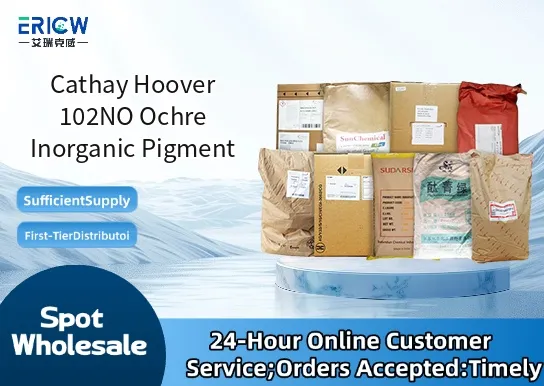
High color strength and excellent tinting efficiency in both aqueous and solvent-based systems.
Outstanding lightfastness and weather resistance, meeting ISO 105-B02 (≥7) and ASTM D4303 standards.
Thermally stable up to 350°C, suitable for high-bake industrial coatings and polymer processing.
Non-toxic, heavy-metal-free formulation compliant with EN 71-3 and RoHS 2.0 directives.
Low oil absorption (~18–22 g/100g) enabling high pigment loading with optimal rheology control.
Architectural and industrial coatings, including exterior wall paints and metal primers.
Plastic coloration for PVC, polyolefins, and engineering thermoplastics.
Ceramic glazes and underglaze decorations requiring thermal stability during firing.
Concrete and mortar colorants for precast and ready-mix applications.
Printing inks for packaging and security printing where UV durability is critical.
| Chemical Type | Natural ochre-derived iron oxide (α-Fe₂O₃ dominant) |
| Product Form | Fine dry powder |
| Appearance | Free-flowing reddish-yellow granular powder |
| Primary Applications | Coatings, plastics, construction materials, ceramics |
| Key Features | Lightfast, weather-resistant, heat-stable, non-toxic |
| Particle Size (D50) | 0.8–1.2 μm |
| pH (5% aqueous slurry) | 6.5–7.5 |
| Volatile Content (105°C, 2h) | ≤0.5 wt% |
Q1: What is the primary chemical composition of Cathay Hoover 102NO?
A: Cathay Hoover 102NO is an iron oxide-based inorganic pigment, primarily composed of hydrated iron(III) oxide (Fe₂O₃·nH₂O), formulated to deliver consistent ochre hue, high opacity, and excellent lightfastness typical of natural earth-derived pigments.
Q2: Is this pigment suitable for use in exterior architectural coatings?
A: Yes — 102NO exhibits strong UV stability, low chromatic shift under weathering, and good alkali resistance, making it well-suited for exterior masonry paints, stucco systems, and cementitious renders where long-term color retention is required.
Q3: How does 102NO compare to organic yellow or red pigments in terms of heat stability?
A: As an inorganic iron oxide, 102NO offers superior thermal stability—remaining unchanged at processing temperatures commonly encountered in powder coating curing, ceramic glaze firing, and polymer compounding—unlike many organic pigments which may degrade or darken above 180°C.
Q4: Can this pigment be dispersed in water-based systems without surfactants?
A: While 102NO is inherently hydrophilic due to its surface hydration, optimal dispersion and long-term colloidal stability in aqueous media typically require compatible dispersants or wetting agents—especially for high-solids or low-viscosity formulations.
Contact With Us:
E-mail: wangxingqiang@ericwchem.com
Have a Questions? Call Us:
Add:
Building A1, Jiete Industrial Park, Huangpu District, Guangzhou City, Guangdong Province, China