English
 Español
 tiếng việt
 русский
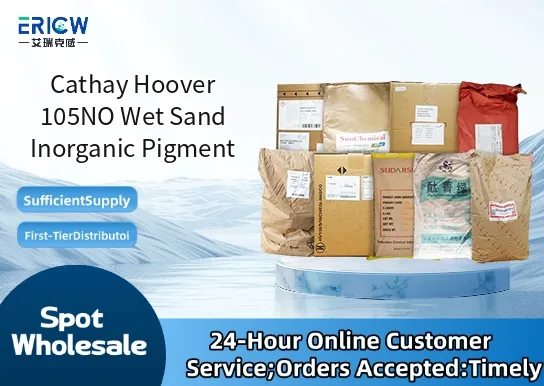
High chroma and excellent color consistency in wet-sand pigment dispersion systems.
Superior thermal stability up to 800 °C, ensuring integrity during high-temperature ceramic and refractory processing.
Low soluble salt content (< 0.5 wt%), minimizing efflorescence risk in architectural coatings and mortars.
Optimized particle size distribution for enhanced suspension stability in aqueous slurry formulations.
Non-hazardous, heavy-metal-free composition compliant with EU REACH and US EPA TSCA requirements.
Ceramic tile glazes and underglaze decorations.
Architectural precast concrete and exposed aggregate finishes.
Refractory linings for kilns, furnaces, and incinerators.
Colored cement-based mortars and grouts.
High-performance terrazzo and polished concrete systems.
| Chemical Type | Complex metal oxide (Fe–Cr–Ni spinel-based) |
| Product Form | Wet-filtered, moisture-stabilized cake (~35–40% residual moisture) |
| Appearance | Uniform dark brown to black granular sand-like mass |
| Primary Applications | Ceramics, architectural concrete, refractories, terrazzo |
| Key Features | Heat-resistant, alkali-stable, low solubility, dispersible in water |
| Benefits | Consistent batch-to-batch color, reduced settling, no VOC contribution |
| pH (10% slurry) | 7.2–8.0 |
| Storage Stability | 12 months in sealed container at 5–30 °C |
Q1: What is the primary chemical composition and structural basis of Cathay Hoover 105NO?
A: Cathay Hoover 105NO is a wet-sand processed inorganic pigment based on an iron oxide–silica composite system, engineered to deliver consistent warm beige-to-tan hues with enhanced dispersion stability in aqueous and polar organic media.
Q2: Is this pigment suitable for use in water-based architectural coatings and industrial primers?
A: Yes — its wet-sand processing imparts excellent hydrophilic surface characteristics and low dusting tendency, making it highly compatible with water-based acrylic, styrene-acrylic, and PVA dispersions commonly used in interior/exterior architectural paints and corrosion-inhibiting primers.
Q3: How does the wet-sand process benefit performance compared to dry-ground equivalents?
A: The controlled wet-sand milling refines particle morphology, reduces agglomeration, and improves surface uniformity — resulting in superior tinting strength, improved batch-to-batch color consistency, and reduced rheological impact in formulated systems.
Q4: Can Cathay Hoover 105NO be used in cementitious and gypsum-based decorative plasters?
A: Yes — as a stable inorganic pigment, it exhibits excellent alkali resistance and thermal stability under typical hydration conditions, supporting reliable color development in Portland cement, blended cements, and calcium sulfate plasters without fading or efflorescence interaction.
Q5: What are recommended handling and storage practices to maintain optimal dispersion performance?
A: Store in original sealed containers in a cool, dry environment away from direct sunlight and moisture sources. Avoid prolonged exposure to high humidity during handling, and disperse using low-shear mixing initially to prevent re-agglomeration before ramping up to final dispersion energy.
Contact With Us:
E-mail: wangxingqiang@ericwchem.com
Have a Questions? Call Us:
Add:
Building A1, Jiete Industrial Park, Huangpu District, Guangzhou City, Guangdong Province, China