English
 Español
 tiếng việt
 русский
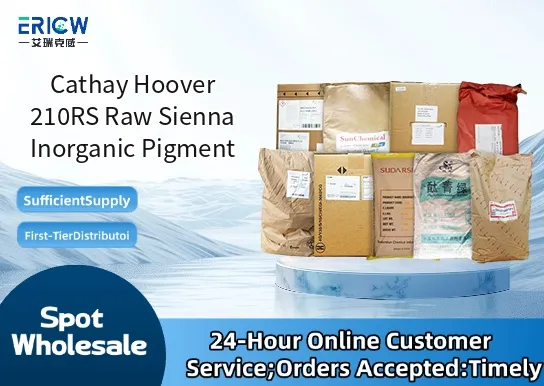
High color strength and excellent tinting power in both aqueous and solvent-based systems.
Outstanding lightfastness and weather resistance, meeting ISO 105-B02 (Grade 7–8) requirements.
Thermally stable up to 350 °C, suitable for high-bake coating and plastic processing applications.
Low oil absorption (< 18 g/100 g), enabling high pigment loading with improved dispersion efficiency.
Non-toxic, heavy-metal-free formulation compliant with EN 71-3 and RoHS directives.
Architectural and industrial coatings including exterior wall paints and metal primers.
Plastic coloration for polyolefins, PVC, and engineering thermoplastics.
Ceramic glazes and underglaze decorations requiring heat stability and chemical inertness.
Concrete and mortar colorants for precast and ready-mix applications.
Printing inks for packaging and security printing where lightfastness is critical.
| Chemical Type | Natural earth-derived iron oxide (Fe₂O₃·H₂O) |
| Product Form | Fine dry powder |
| Appearance | Free-flowing reddish-brown powder |
| Primary Applications | Coatings, plastics, ceramics, construction materials |
| Key Features | Lightfast, weather-resistant, thermally stable, non-toxic |
| Benefits | Consistent batch-to-batch color, easy dispersion, low volatility |
| pH (5% aqueous slurry) | 6.5–7.5 |
| Volatile Matter (105 °C, 2 hrs) | ≤ 1.0 wt% |
Q1: What is the primary chemical composition of Cathay Hoover 210RS Raw Sienna?
A: Cathay Hoover 210RS is a naturally derived iron oxide-based inorganic pigment, primarily composed of hydrated iron oxide (Fe₂O₃·nH₂O) with minor earth mineral impurities that contribute to its characteristic warm, earthy tone. It contains no synthetic organic dyes or heavy metal additives.
Q2: Is this pigment suitable for use in architectural coatings and exterior applications?
A: Yes — 210RS exhibits excellent lightfastness, thermal stability, and resistance to alkali environments, making it well-suited for cementitious renders, stucco, lime washes, and acrylic-based exterior wall paints. Its inorganic nature ensures long-term color retention under UV exposure and weathering.
Q3: How does 210RS differ from synthetic iron oxide pigments in terms of tinting strength and dispersion behavior?
A: As a natural earth pigment, 210RS has lower tinting strength and higher opacity compared to high-purity synthetic iron oxides. It disperses readily in aqueous systems but may require mild mechanical agitation in viscous or low-shear formulations. Its particle morphology supports good suspension stability in water-based architectural coatings.
Q4: Can 210RS be used in lime-based or silicate mineral paints?
A: Yes — its inherent compatibility with high-pH binders such as slaked lime, potassium silicate, and hydraulic lime makes it an ideal choice for traditional and eco-friendly mineral paint systems. No pre-treatment or surface modification is required.
Q5: What is the typical dosage range when incorporating 210RS into coating formulations?
A: Dosage depends on the desired chroma, opacity, and binder system, but it is generally used at low concentrations — typically ranging from 0.1% to 2% by weight relative to total formulation solids. Higher loadings may be applied for full-coverage earth-tone finishes without compromising film integrity.
Contact With Us:
E-mail: wangxingqiang@ericwchem.com
Have a Questions? Call Us:
Add:
Building A1, Jiete Industrial Park, Huangpu District, Guangzhou City, Guangdong Province, China