English
 Español
 tiếng việt
 русский
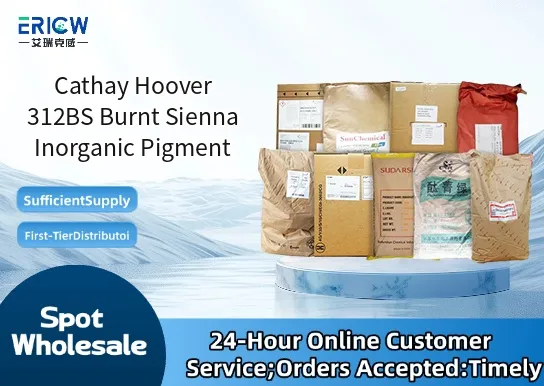
High thermal stability up to 800 °C, ensuring color integrity in high-temperature processing.
Excellent lightfastness and weather resistance, maintaining hue and opacity under prolonged UV exposure.
Non-toxic, heavy-metal-free formulation compliant with global regulatory standards including EN 71-3 and RoHS.
Optimized particle size distribution for superior dispersion and tinting strength in diverse binders.
Chemically inert and alkali-resistant, suitable for cementitious and lime-based systems.
Architectural coatings and exterior wall paints requiring durable earth-tone coloration.
Concrete and mortar colorants for precast elements, paving slabs, and decorative concrete.
Plastic coloration for outdoor applications including garden furniture and construction profiles.
Ceramic glazes and underglaze decorations where consistent firing behavior is critical.
| Chemical Type | Iron oxide-based inorganic pigment (α-Fe₂O₃ dominant phase) |
| Product Form | Free-flowing dry powder |
| Appearance | Uniform reddish-brown granular powder |
| Primary Applications | Coatings, construction materials, plastics, ceramics |
| Key Features | Thermal stability, lightfastness, chemical inertness, non-volatility |
| Benefits | Color consistency, low migration, long-term durability, regulatory compliance |
| pH (5% aqueous suspension) | 6.5 – 8.0 |
| Volatile Matter (105 °C, 2 h) | ≤ 0.5 wt% |
Q1: What is the primary chemical composition of Cathay Hoover 312BS?
A: Cathay Hoover 312BS is an iron oxide-based inorganic pigment, primarily composed of thermally stabilized α-Fe₂O₃ (hematite), with controlled particle morphology and surface characteristics optimized for color consistency and dispersion stability.
Q2: Is this pigment suitable for use in exterior architectural coatings?
A: Yes — as a high-purity, calcined iron oxide pigment, 312BS offers excellent UV resistance, weatherfastness, and alkali stability, making it well-suited for long-term performance in exterior acrylic, silicone-acrylic, and silicate-based architectural coatings.
Q3: How does 312BS differ from standard burnt sienna pigments in terms of tinting strength and undertone?
A: Compared to conventional burnt siennas, 312BS delivers higher chroma and a slightly warmer, more uniform red-brown undertone due to its narrow particle size distribution and optimized calcination profile — resulting in improved tinting strength and batch-to-batch color reproducibility.
Q4: Can 312BS be used in waterborne systems without dispersion additives?
A: While 312BS exhibits good wettability in aqueous media, optimal dispersion and long-term stability in waterborne coatings or inks typically require appropriate surfactants or polymeric dispersants — formulation testing is recommended to confirm compatibility and rheological behavior.
Contact With Us:
E-mail: wangxingqiang@ericwchem.com
Have a Questions? Call Us:
Add:
Building A1, Jiete Industrial Park, Huangpu District, Guangzhou City, Guangdong Province, China