English
 Español
 tiếng việt
 русский
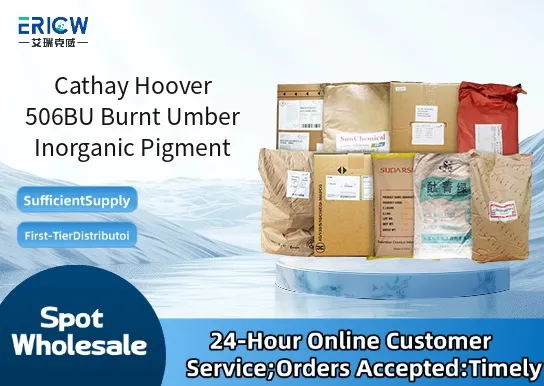
High thermal stability up to 400°C, ensuring color integrity during high-temperature processing.
Excellent lightfastness and weather resistance, suitable for long-term outdoor exposure.
Non-toxic, heavy-metal-free formulation compliant with global regulatory standards including EN 71-3 and RoHS.
Consistent particle size distribution for optimal dispersion and batch-to-batch color reproducibility.
Strong tinting strength and opacity in both aqueous and solvent-based systems.
Architectural coatings and exterior wall paints.
Industrial maintenance coatings for metal and concrete substrates.
Plastic coloration for automotive interior components and construction profiles.
Ceramic glazes and underglaze decorations requiring heat stability.
Concrete and mortar colorants for precast and ready-mix applications.
| Chemical Type | Iron oxide-based inorganic pigment (Fe₂O₃–MnO complex) |
| Product Form | Fine dry powder |
| Appearance | Uniform burnt umber granular powder |
| Primary Applications | Coatings, plastics, construction materials, ceramics |
| Key Features | Heat stable, lightfast, non-bleeding, alkali resistant |
| Benefits | Low VOC impact, low dust generation, easy dispersion |
| pH (10% aqueous slurry) | 6.5–8.0 |
| Volatile Matter (105°C, 2 hrs) | ≤0.5% w/w |
Q1: What are the key advantages of Cathay Hoover 506BU compared to organic burnt umber alternatives?
A: Cathay Hoover 506BU offers superior thermal stability, lightfastness, and chemical resistance due to its inorganic iron oxide-based composition. Unlike many organic counterparts, it maintains consistent color performance under prolonged UV exposure and elevated processing temperatures, making it especially suitable for demanding industrial coatings and plastics applications.
Q2: Is 506BU suitable for use in water-based systems?
A: Yes, Cathay Hoover 506BU is surface-treated to enhance dispersibility and stability in aqueous media. It performs well in water-based architectural paints, industrial coatings, and construction mortars when properly dispersed using standard wetting agents and high-shear mixing protocols.
Q3: How does 506BU behave during high-temperature processing, such as in engineering thermoplastics?
A: As an inorganic iron oxide pigment, 506BU exhibits excellent thermal stability and retains its color integrity up to typical polymer processing temperatures (e.g., extrusion and injection molding of polyolefins and engineering resins). No significant charring, fading, or gas evolution is observed under standard processing conditions.
Q4: Can 506BU be used in food-contact compliant formulations?
A: While 506BU is based on iron oxides approved for certain food-contact applications, final regulatory compliance depends on the full formulation, intended use, and applicable regional requirements (e.g., FDA 21 CFR, EU regulations). Users must conduct full regulatory validation with their specific end-use system and consult official documentation before claiming food-contact suitability.
Contact With Us:
E-mail: wangxingqiang@ericwchem.com
Have a Questions? Call Us:
Add:
Building A1, Jiete Industrial Park, Huangpu District, Guangzhou City, Guangdong Province, China