English
 Español
 tiếng việt
 русский
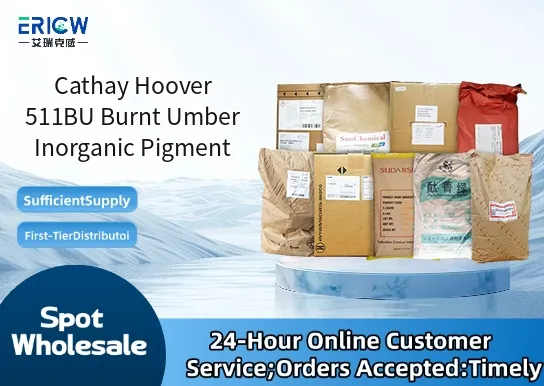
High thermal stability up to 800 °C, ensuring color retention in high-temperature processing.
Excellent lightfastness and weather resistance, maintaining consistent hue under prolonged UV exposure.
Non-toxic and heavy metal-free formulation compliant with global regulatory standards including EN 71-3 and RoHS.
Superior dispersion performance in both aqueous and solvent-based systems, enabling uniform color development.
Consistent batch-to-batch color strength and particle size distribution for reliable manufacturing repeatability.
Architectural and industrial coatings requiring durable earth-tone pigmentation.
Concrete and cement-based products including paving slabs, precast elements, and mortar.
Plastic compounds for outdoor applications such as garden furniture, construction profiles, and automotive trim.
Ceramic glazes and underglaze decorations where oxidation stability is critical.
Printing inks for packaging and decorative laminates demanding non-fading brown hues.
| Chemical Type | Iron oxide-based inorganic pigment (Fe₂O₃–MnO–Al₂O₃ complex) |
| Product Form | Free-flowing dry powder |
| Appearance | Uniform reddish-brown granular powder |
| Primary Applications | Coatings, construction materials, plastics, ceramics, inks |
| Key Features | Heat stable, lightfast, weather resistant, non-toxic |
| Benefits | Low migration, excellent opacity, pH-stable, low oil absorption |
| Particle Size (D50) | 0.8–1.2 µm (laser diffraction) |
| Specific Gravity | 4.2–4.5 g/cm³ |
Q1: What is the primary chemical composition of Cathay Hoover 511BU?
A: Cathay Hoover 511BU is an iron oxide-based inorganic pigment, primarily composed of hydrated and calcined iron oxides (Fe₂O₃ and FeO·Fe₂O₃), with trace amounts of naturally occurring impurities typical of mineral-derived burnt umber pigments.
Q2: Is 511BU suitable for use in exterior architectural coatings?
A: Yes — as a high-performance inorganic pigment, 511BU offers excellent lightfastness, weather resistance, and thermal stability, making it well-suited for long-term outdoor applications such as façade paints, stucco systems, and concrete colorants.
Q3: How does 511BU compare to synthetic iron oxide umbers in terms of tinting strength and dispersion behavior?
A: Compared to synthetic alternatives, 511BU exhibits moderate tinting strength and slightly broader particle size distribution, which may require optimized wetting and dispersion protocols in demanding systems like high-gloss industrial coatings or aqueous inkjet formulations.
Q4: Can 511BU be used in food-contact plastics or toys?
A: While 511BU complies with general safety requirements for inorganic pigments, it is not pre-qualified for direct food-contact or toy applications under specific regulatory frameworks. End-use compliance must be verified by the formulator through full regulatory assessment and migration testing per applicable regional requirements.
Contact With Us:
E-mail: wangxingqiang@ericwchem.com
Have a Questions? Call Us:
Add:
Building A1, Jiete Industrial Park, Huangpu District, Guangzhou City, Guangdong Province, China