English
 Español
 tiếng việt
 русский
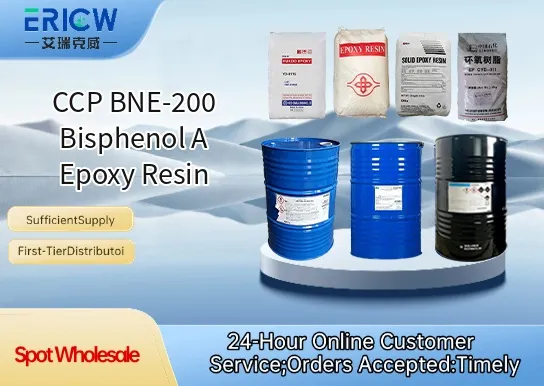
High purity Bisphenol A-based epoxy resin with consistent molecular weight distribution.
Excellent thermal stability and low ionic chloride content for enhanced electrical insulation performance.
Optimized viscosity for improved processability in casting, laminating, and impregnation applications.
Superior adhesion to metals, fiberglass, and carbon substrates without requiring surface priming.
Low volatile organic compound (VOC) emission, supporting environmentally compliant manufacturing processes.
Electrical insulation systems for medium- and high-voltage transformers and bushings.
Structural composites in wind turbine blade root joints and marine hull laminates.
High-performance printed circuit board (PCB) prepregs and copper-clad laminates.
Adhesives and sealants for aerospace interior components requiring flame, smoke, and toxicity (FST) compliance.
Casting resins for encapsulation of sensors, power electronics, and LED modules.
| Chemical Type | Bisphenol A diglycidyl ether (DGEBA) epoxy resin |
| Product Form | Clear to pale yellow viscous liquid |
| Appearance | Homogeneous, transparent, free of visible gels or particles |
| Epoxy Equivalent Weight (EEW) | 185–192 g/eq |
| Viscosity at 25°C | 12,000–16,000 mPa·s |
| Chloride Content | ≤ 800 ppm |
| Softening Point | 10–14°C |
| Storage Stability | ≥ 12 months at 20–25°C in sealed original packaging |
Q1: What is the typical molecular weight range of CCP BNE-200?
A: CCP BNE-200 is a liquid, low-to-medium molecular weight bisphenol A epoxy resin, designed for balanced reactivity and viscosity. Its molecular weight falls within the general range characteristic of standard liquid DGEBA resins, supporting ease of handling and compatibility with common curing agents.
Q2: Is CCP BNE-200 suitable for food-contact coatings or inks?
A: CCP BNE-200 is formulated for industrial coating, adhesive, and composite applications. While it may be incorporated into systems intended for indirect food contact, final regulatory compliance depends on the complete formulation, processing conditions, and end-use validation — users must conduct appropriate migration testing and consult applicable regional regulations before claiming food-contact suitability.
Q3: How does CCP BNE-200 compare to higher-viscosity solid epoxy resins in terms of processing?
A: As a liquid resin, CCP BNE-200 offers significantly lower viscosity at room temperature compared to solid epoxy grades, enabling easier mixing, pumping, and application without solvent dilution or elevated temperature pre-melting. This supports efficient processing in roll-coating, spray, and impregnation operations.
Q4: What types of curing agents are commonly used with CCP BNE-200?
A: CCP BNE-200 is compatible with a broad range of amine-based hardeners (aliphatic, cycloaliphatic, and aromatic), anhydrides, and catalytic systems. Selection depends on the desired cure profile, thermal performance, and mechanical properties — for example, aliphatic amines for ambient-cure coatings, or dicyandiamide for one-component powder systems.
Contact With Us:
E-mail: wangxingqiang@ericwchem.com
Have a Questions? Call Us:
Add:
Building A1, Jiete Industrial Park, Huangpu District, Guangzhou City, Guangdong Province, China