English
 Español
 tiếng việt
 русский
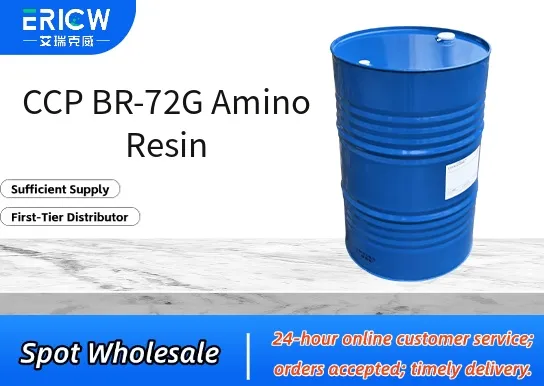
High reactivity with formaldehyde and melamine precursors for rapid cure kinetics.
Excellent compatibility with acrylic, polyester, and alkyd resin systems.
Low free formaldehyde content (< 0.3 wt%), meeting stringent VOC and regulatory requirements.
Superior thermal stability and crosslink density for enhanced chemical resistance.
Consistent batch-to-batch performance ensured by strict in-process quality control.
Automotive OEM and refinish coatings requiring high-gloss, durable topcoats.
Industrial coil coatings for pre-painted metal substrates.
Appliance enamel coatings demanding excellent hardness and mar resistance.
Can coatings for food and beverage packaging with FDA-compliant formulation options.
Wood furniture and panel finishes requiring fast oven cure and low yellowing tendency.
| Chemical Type | Melamine-formaldehyde condensate (partially alkylated) |
| Product Form | Clear to pale yellow liquid |
| Appearance | Homogeneous, low-viscosity solution |
| Solvent Content | Butanol/isopropanol blend (approx. 65–70 wt%) |
| Non-Volatile Content | 28–32 wt% (at 125 °C, 60 min) |
| pH (10% aqueous solution) | 7.8–8.5 |
| Free Formaldehyde | ≤ 0.3 wt% |
| Storage Stability | ≥ 6 months at 20–25 °C in sealed container |
Q1: What is the primary function of CCP BR-72G in coating formulations?
A: CCP BR-72G is a melamine-formaldehyde-based amino resin designed to act as a crosslinking agent, enhancing hardness, chemical resistance, and thermal stability in thermosetting coatings—particularly for metal decorating, coil coating, and industrial finishes.
Q2: Is CCP BR-72G compatible with common hydroxyl-functional resins?
A: Yes, it exhibits good compatibility with hydroxyl-bearing binders such as polyester, acrylic, and alkyd resins. Its reactivity profile allows for balanced cure speed and pot life under conventional baking conditions.
Q3: How should CCP BR-72G be stored to maintain optimal performance?
A: Store in tightly sealed original containers at temperatures between 5 °C and 30 °C, away from direct sunlight and sources of heat or moisture. Prolonged exposure to freezing or high humidity may affect viscosity and reactivity.
Q4: What are typical dosage guidelines for CCP BR-72G in a standard coating system?
A: Dosage depends on formulation requirements and desired film properties, but it is typically used at low concentrations—generally ranging from 0.1% to 2% by weight relative to total non-volatile content—with adjustments based on resin functionality and cure schedule.
Q5: Does CCP BR-72G require acid catalysis for efficient curing?
A: While it can undergo self-condensation at elevated temperatures, optimal crosslinking efficiency and reduced bake time are typically achieved with mild acid catalysts—such as blocked p-toluenesulfonic acid or weak organic acids—selected to match the application’s stability and cure profile requirements.
Contact With Us:
E-mail: wangxingqiang@ericwchem.com
Have a Questions? Call Us:
Add:
Building A1, Jiete Industrial Park, Huangpu District, Guangzhou City, Guangdong Province, China