English
 Español
 tiếng việt
 русский
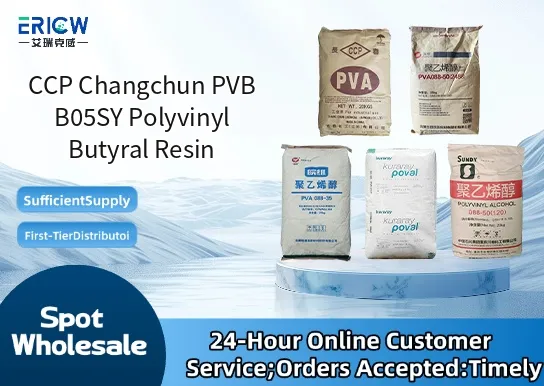
Excellent adhesion to glass and various substrates, ensuring strong interfacial bonding in laminated safety glass.
High optical clarity and low haze, meeting stringent requirements for automotive and architectural glazing.
Superior impact resistance and energy absorption, contributing to enhanced safety performance in laminated glass applications.
Good thermal stability and processing compatibility with standard PVB film extrusion and lamination equipment.
Consistent molecular weight distribution and hydroxyl content, enabling reliable batch-to-batch reproducibility.
Primary resin component in polyvinyl butyral (PVB) interlayers for automotive laminated windshields.
Key raw material for architectural safety glass used in facades, skylights, and overhead glazing.
Base polymer for specialty PVB films requiring high transparency and mechanical resilience.
Functional binder in advanced composite interlayers incorporating acoustic or solar-control additives.
Resin feedstock for custom-formulated PVB solutions targeting anti-shatter and blast-resistant glazing systems.
| Chemical Type | Polyvinyl butyral (PVB) copolymer |
| Product Form | Free-flowing white granular powder |
| Appearance | Off-white to light yellow granules, free of visible impurities |
| Butyral Content | 65–70 wt% (typical) |
| Hydroxyl Content | 18–22 wt% (typical) |
| Vinyl Acetate Residue | < 1.5 wt% |
| Viscosity (4% w/v in ethanol) | 4.0–5.5 mPa·s (at 20°C) |
| Moisture Content | < 0.5 wt% |
Q1: What are the primary functional benefits of CCP Changchun PVB B05SY in adhesive and coating formulations?
A: CCP Changchun PVB B05SY offers excellent film-forming capability, strong adhesion to polar substrates (including glass, metals, and treated plastics), and good compatibility with a range of resins and plasticizers. It enhances flexibility, toughness, and moisture resistance in final films without significantly compromising clarity or processability.
Q2: How does B05SY differ from other PVB grades in terms of molecular weight and processing behavior?
A: B05SY is formulated as a medium-molecular-weight PVB resin, delivering a balanced profile between solubility, melt viscosity, and mechanical strength. It dissolves readily in common solvent blends (e.g., alcohols, ketones, esters) and exhibits stable rheology during high-shear mixing—making it well-suited for both solvent-based and hot-melt adhesive systems.
Q3: Is B05SY suitable for use in safety glass interlayer applications?
A: While B05SY shares the core polyvinyl butyral chemistry used in laminated safety glass interlayers, it is specifically designed and optimized for industrial adhesives, primers, and protective coatings—not for structural automotive or architectural interlayer films. Customers requiring interlayer-grade performance should consult CCP’s dedicated high-purity, high-viscosity PVB product line.
Q4: What storage conditions are recommended to maintain long-term stability of B05SY resin?
A: Store B05SY in its original sealed packaging at temperatures between 10°C and 30°C, in a dry, well-ventilated area away from direct sunlight and strong oxidizing agents. Prolonged exposure to high humidity or elevated temperatures may affect flow characteristics and dissolution rate; therefore, controlled ambient storage is advised for optimal handling performance.
Contact With Us:
E-mail: wangxingqiang@ericwchem.com
Have a Questions? Call Us:
Add:
Building A1, Jiete Industrial Park, Huangpu District, Guangzhou City, Guangdong Province, China