English
 Español
 tiếng việt
 русский
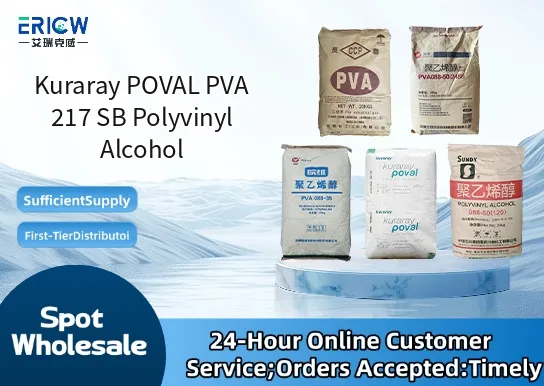
High water solubility with rapid dissolution in cold and warm water.
Excellent film-forming capability yielding strong, flexible, and transparent films.
Good adhesion to polar substrates including paper, cellulose, metals, and ceramics.
Low residual acetate content ensuring high hydrophilicity and biodegradability.
Consistent batch-to-batch performance due to stringent GMP-aligned manufacturing control.
Water-soluble packaging films for agrochemicals and detergent pods.
Binder in ceramic green bodies and refractory casting slips.
Temporary protective coating for metal surface treatment and plating processes.
Thickener and stabilizer in aqueous pigment dispersions and textile printing pastes.
Matrix component in pharmaceutical immediate-release tablets and oral thin films.
| Chemical Type | Polyvinyl alcohol (fully hydrolyzed) |
| Product Form | Free-flowing white granules |
| Appearance | White to off-white granular solid |
| Saponification Degree | ≥ 98.0 mol% |
| Viscosity (4% aqueous solution at 20°C) | 20–23 mPa·s |
| Residual Acetate Content | ≤ 1.5 wt% |
| pH (1% aqueous solution) | 5.0–7.0 |
| Moisture Content | ≤ 5.0 wt% |
Q1: What is the primary functional role of POVAL PVA 217 SB in water-based formulations?
A: POVAL PVA 217 SB functions primarily as a film-forming binder and rheology modifier in aqueous systems. Its balanced hydrolysis degree and molecular weight support good solubility, cohesive strength, and adhesion to polar substrates—making it especially suitable for coatings, adhesives, and agrochemical suspensions.
Q2: How does PVA 217 SB differ from fully hydrolyzed or lower-hydrolysis PVA grades?
A: PVA 217 SB features a partially hydrolyzed structure (intermediate saponification level), offering a practical balance between water solubility and organic solvent resistance. Compared to fully hydrolyzed grades, it exhibits faster dissolution and improved flexibility in dried films; compared to low-hydrolysis types, it delivers higher tensile strength and better moisture barrier properties.
Q3: Is POVAL PVA 217 SB suitable for use in food-contact or pharmaceutical applications?
A: POVAL PVA 217 SB is manufactured under stringent quality control and is commonly used in applications requiring high purity, including certain food packaging coatings and pharmaceutical tablet binders. However, final regulatory compliance depends on the full formulation, processing conditions, and end-use requirements—users must validate suitability with their own regulatory assessment.
Q4: What are key handling considerations during dissolution and storage?
A: For optimal dissolution, gradual dispersion into cold water followed by gentle heating to 80–90°C is recommended to avoid surface gelation. Once dissolved, solutions should be stored at controlled temperature and protected from microbial growth using appropriate preservatives if needed. Dry powder should be kept in sealed containers under cool, dry conditions to prevent moisture absorption and clumping.
Contact With Us:
E-mail: wangxingqiang@ericwchem.com
Have a Questions? Call Us:
Add:
Building A1, Jiete Industrial Park, Huangpu District, Guangzhou City, Guangdong Province, China