English
 Español
 tiếng việt
 русский
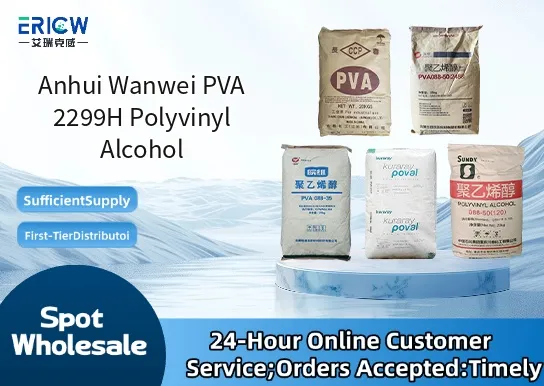
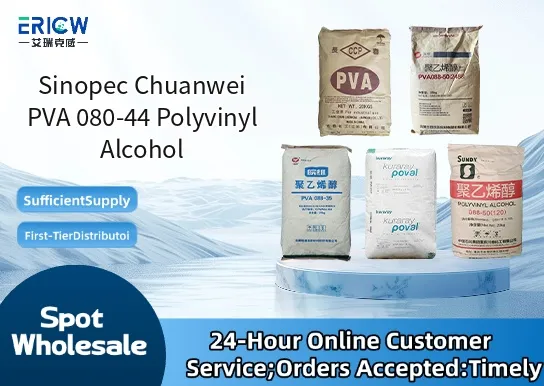
High degree of hydrolysis (≥99.0%) ensuring excellent water solubility and film-forming capability.
Low residual acetaldehyde content, meeting stringent safety requirements for pharmaceutical and food-contact applications.
Consistent molecular weight distribution with viscosity grade corresponding to 22–24 cP (4% aqueous solution at 20°C).
Excellent adhesion to cellulose, paper, and polar substrates without requiring additional crosslinkers.
Free-flowing white granular powder with low dust generation for safe handling and automated dosing.
Water-soluble packaging films for agrochemicals, detergents, and industrial cleaners.
Binders in ceramic green bodies and refractory casting slurries.
Thickener and stabilizer in pesticide suspension concentrates (SC) and herbicide formulations.
Protective colloid in emulsion polymerization of vinyl acetate and acrylic monomers.
Release agent and surface modifier for fiberglass roving and carbon fiber prepregs.
| Chemical Type | Polyvinyl alcohol (fully hydrolyzed) |
| Product Form | Free-flowing granular powder |
| Appearance | White to off-white granules |
| Hydrolysis Degree | ≥99.0 mol% |
| Viscosity (4% aq. sol., 20°C) | 22–24 cP |
| Volatiles (105°C, 2 h) | ≤5.0 wt% |
| Residual Acetaldehyde | ≤0.5 ppm |
| pH (1% aqueous solution) | 5.5–6.5 |
Q1: What does the “2299H” designation indicate for this PVA grade?
A: The “2299H” reflects Anhui Wanwei’s internal grading system: “22” denotes approximate hydrolysis degree (~99%), “99” indicates high polymerization degree (medium-to-high molecular weight), and “H” signifies a heat-stable or specially processed variant optimized for thermal stability during drying or extrusion applications.
Q2: How does PVA 2299H differ from standard PVA 1788 or PVA 2499 in practical use?
A: Compared to lower-molecular-weight grades like PVA 1788, 2299H offers higher solution viscosity and improved film strength at equivalent concentrations. Versus higher-hydrolysis grades like PVA 2499, it retains slightly better water solubility while maintaining strong adhesion and barrier properties—making it especially suitable for aqueous coatings, textile sizing, and temporary binders where balanced dissolution rate and mechanical performance are required.
Q3: Is PVA 2299H suitable for food-contact applications?
A: PVA 2299H is synthesized from vinyl acetate monomer and meets general purity requirements for indirect food-contact uses—such as paper coatings, capsule binders, or release layers—when formulated and processed in compliance with applicable regional regulatory frameworks. Final suitability depends on full formulation, processing conditions, and end-use compliance verification by the customer.
Q4: What is the recommended dissolution procedure for optimal clarity and viscosity development?
A: For best results, gradually disperse PVA 2299H in cold water with vigorous agitation to avoid lumping, then heat the slurry to 85–95 °C while maintaining gentle stirring until fully dissolved—typically within 30–60 minutes. Avoid prolonged overheating above 95 °C to minimize potential chain degradation and viscosity loss.
Contact With Us:
E-mail: wangxingqiang@ericwchem.com
Have a Questions? Call Us:
Add:
Building A1, Jiete Industrial Park, Huangpu District, Guangzhou City, Guangdong Province, China