English
 Español
 tiếng việt
 русский
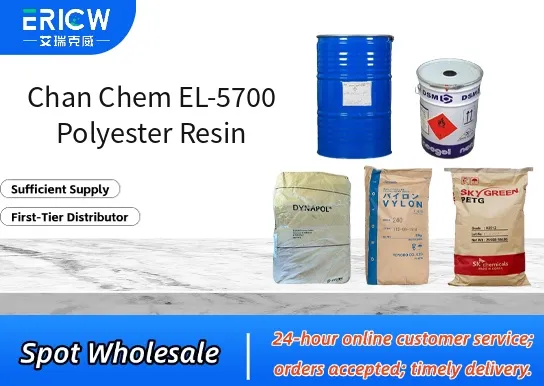
High reactivity with standard MEKP initiators for rapid gelation and efficient production cycles.
Excellent mechanical strength and dimensional stability in cured laminates.
Low styrene emission profile, supporting improved workplace safety and regulatory compliance.
Good compatibility with glass fiber reinforcements and common fillers (e.g., calcium carbonate, alumina trihydrate).
Consistent batch-to-batch viscosity and reactivity, ensuring process reliability in automated resin infusion and spray-up operations.
Fiberglass-reinforced plastic (FRP) tanks and chemical storage vessels.
Marine deck and hull components requiring weather resistance and impact durability.
Transportation interior panels and structural parts for buses and railcars.
Industrial grating, ducting, and corrosion-resistant linings.
Wind turbine blade shell resins (prepreg and infusion variants).
| Chemical Type | Unsaturated orthophthalic polyester resin |
| Product Form | Liquid, ready-to-use |
| Appearance | Clear to pale yellow viscous liquid |
| Viscosity (25°C, mPa·s) | 350–450 |
| Acid Value (mg KOH/g) | 18–22 |
| Styrene Content (wt%) | 38–42 |
| Density (25°C, g/cm³) | 1.12–1.15 |
| Primary Applications | Structural FRP, corrosion-resistant laminates, semi-structural composites |
Q1: What is the primary application of EL-5700 in polyester resin systems?
A: EL-5700 is designed as a reactive diluent and viscosity modifier for unsaturated polyester resins, commonly used in casting, laminating, and gel coat formulations where improved flow, reduced styrene emission, and enhanced cure profile are desired.
Q2: How does EL-5700 compare to conventional styrene in terms of volatility and handling safety?
A: EL-5700 exhibits significantly lower vapor pressure than styrene, resulting in reduced volatility during processing and improved workplace air quality. It is classified as non-hazardous for transport under standard conditions and requires standard industrial hygiene practices—no special explosion-proof equipment is typically needed.
Q3: Can EL-5700 be used as a full or partial replacement for styrene in existing formulations?
A: Yes—EL-5700 is fully miscible with standard unsaturated polyesters and can replace styrene on a weight-for-weight basis. Partial substitution (e.g., 30–70%) is most common, allowing formulators to balance viscosity reduction, reactivity, and final physical properties without major process adjustments.
Q4: Does EL-5700 affect the curing kinetics or final crosslink density of polyester systems?
A: EL-5700 participates in the free-radical copolymerization reaction and generally supports consistent gel time and full cure development when matched with appropriate initiators. Final crosslink density remains comparable to styrene-based systems, though minor adjustments to initiator type or dosage may be beneficial depending on the application.
Contact With Us:
E-mail: wangxingqiang@ericwchem.com
Have a Questions? Call Us:
Add:
Building A1, Jiete Industrial Park, Huangpu District, Guangzhou City, Guangdong Province, China