English
 Español
 tiếng việt
 русский
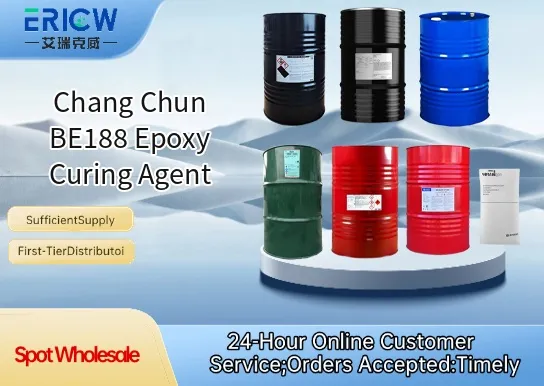
Fast-reacting aliphatic amine-based curing agent for room-temperature and elevated-temperature cure systems.
Excellent compatibility with standard bisphenol-A and bisphenol-F epoxy resins.
Low viscosity ensures easy handling, precise metering, and uniform dispersion in resin formulations.
Delivers high glass transition temperature (Tg) and superior mechanical strength in cured networks.
Low volatility and low odor profile support safer industrial processing and improved workplace compliance.
Structural adhesives for automotive and aerospace assembly.
Electrical encapsulation and potting compounds for power electronics and LED modules.
High-performance coatings for corrosion protection on steel and concrete substrates.
Composite matrix resins for wind turbine blades and fiber-reinforced polymer (FRP) components.
Repair mortars and anchoring grouts in construction and infrastructure maintenance.
| Chemical Type | Aliphatic polyamine |
| Product Form | Liquid |
| Appearance | Clear to pale yellow transparent liquid |
| Viscosity (25°C) | 200–400 mPa·s |
| Density (25°C) | 0.92–0.96 g/cm³ |
| Amine Value | 380–420 mg KOH/g |
| Reactivity Profile | Room-temperature curable; accelerated cure above 60°C |
| Storage Stability | 12 months in original sealed container at <25°C |
Q1: What is the primary chemical nature of BE188?
A: BE188 is a modified aliphatic amine-based epoxy curing agent, designed to offer balanced reactivity, low volatility, and improved compatibility with standard bisphenol-A and bisphenol-F epoxy resins.
Q2: Is BE188 suitable for ambient-cure applications?
A: Yes — BE188 is formulated to enable effective curing at room temperature, making it well-suited for coatings, adhesives, and composite laminates where thermal post-curing is not feasible or desired.
Q3: How does BE188 compare to conventional DETA or TETA in terms of handling safety?
A: BE188 exhibits significantly lower vapor pressure and reduced skin sensitization potential compared to unmodified aliphatic triamines, supporting safer industrial handling without compromising cure performance.
Q4: What types of epoxy systems is BE188 most commonly used with?
A: BE188 demonstrates excellent compatibility with liquid and solid bisphenol-based epoxy resins, as well as novolac epoxies, particularly in high-performance protective coatings, electrical encapsulants, and structural adhesives.
Q5: How should BE188 be stored to maintain optimal performance?
A: Store in tightly sealed original containers under cool, dry conditions away from moisture, direct sunlight, and strong oxidizing agents; prolonged exposure to humid air may affect viscosity and reactivity over time.
Contact With Us:
E-mail: wangxingqiang@ericwchem.com
Have a Questions? Call Us:
Add:
Building A1, Jiete Industrial Park, Huangpu District, Guangzhou City, Guangdong Province, China