English
 Español
 tiếng việt
 русский
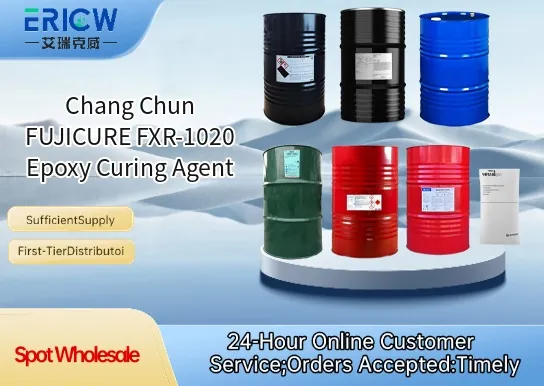
Fast-reacting aliphatic amine-based curing agent enabling rapid room-temperature cure.
Excellent compatibility with standard liquid and solid epoxy resins for uniform crosslinking.
Low viscosity (25–35 mPa·s at 25°C) ensures easy handling, precise metering, and thorough mixing.
Provides superior mechanical strength, chemical resistance, and adhesion to metals and composites.
Low volatility and low odor profile support safer industrial processing and improved workplace compliance.
Structural adhesives for automotive assembly and lightweight component bonding.
Electrical encapsulation and potting compounds in power electronics and LED modules.
High-performance coating systems for corrosion protection of steel infrastructure.
Composite matrix resins for wind turbine blades and aerospace secondary structures.
Repair mortars and grouts requiring fast turnaround in civil engineering projects.
| Chemical Type | Aliphatic polyamine adduct |
| Product Form | Liquid |
| Appearance | Pale yellow to amber clear liquid |
| Density (25°C) | 0.92–0.95 g/cm³ |
| Viscosity (25°C) | 25–35 mPa·s |
| Amine Value | 380–420 mg KOH/g |
| Primary Applications | Room-temperature & accelerated-cure epoxy systems |
| Key Features | Fast cure, low exotherm, excellent toughness and moisture resistance |
Q1: What is the primary functional mechanism of FUJICURE FXR-1020 in epoxy systems?
A: FUJICURE FXR-1020 is a latent, amine-based curing agent designed to initiate epoxy ring-opening polymerization at elevated temperatures. Its latency enables extended pot life at ambient conditions, followed by rapid and efficient crosslinking upon thermal activation—typically above 120 °C.
Q2: Is FXR-1020 suitable for high-gloss, low-color-demand applications such as electronic encapsulants or optical adhesives?
A: Yes—FXR-1020 is formulated to deliver excellent color stability and low yellowing tendency after cure, making it well-suited for applications where aesthetic clarity, transparency, or minimal post-cure discoloration are critical.
Q3: How does FXR-1020 compare to conventional dicyandiamide (DICY) in terms of processing flexibility?
A: FXR-1020 offers improved solubility in common epoxy resins and faster reactivity onset compared to standard DICY, enabling shorter cure cycles without requiring ultra-high temperatures or aggressive accelerators. It also exhibits better compatibility with modified epoxy systems, including those containing flexibilizers or reactive diluents.
Q4: What handling precautions should be observed during storage and formulation?
A: Store FXR-1020 in a cool, dry place under inert atmosphere or sealed packaging to preserve latency and prevent moisture uptake. During formulation, avoid prolonged exposure to humidity or elevated ambient temperatures prior to cure, as this may reduce shelf life of the mixed system.
Contact With Us:
E-mail: wangxingqiang@ericwchem.com
Have a Questions? Call Us:
Add:
Building A1, Jiete Industrial Park, Huangpu District, Guangzhou City, Guangdong Province, China