English
 Español
 tiếng việt
 русский
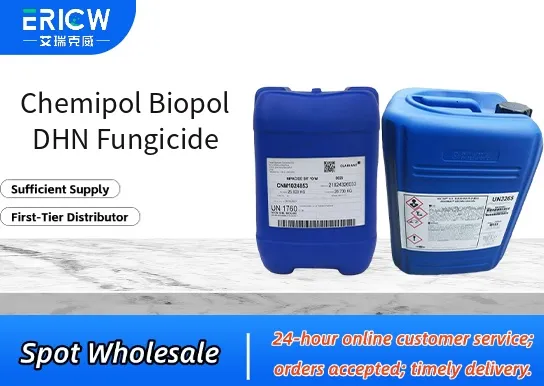
Bio-based formulation derived from natural dihydroxynaphthalene (DHN) metabolites, offering reduced environmental persistence.
Mode of action targets fungal melanin biosynthesis, providing effective control against resistant strains of Botrytis, Alternaria, and Colletotrichum.
Low mammalian toxicity (OECD 423 Category 5), supporting safe handling and compliance with stringent regulatory frameworks.
Compatible with integrated pest management (IPM) programs and approved for use in certified organic agriculture under select regional standards.
Enhanced rainfastness and UV stability due to polymer-encapsulated active ingredient delivery system.
Vineyards for control of grapevine downy mildew and grey mold (Botrytis cinerea).
High-value horticulture including tomatoes, peppers, and cucumbers in protected cultivation systems.
Leafy greens and brassicas in open-field production targeting anthracnose and leaf spot pathogens.
Organic-certified berry crops such as strawberries and raspberries during pre-bloom and fruit-set stages.
Nursery stock and ornamental propagation to prevent damping-off and foliar blight.
| Chemical Type | Biopolymeric dihydroxynaphthalene (DHN) derivative |
| Product Form | Aqueous suspension concentrate (SC) |
| Appearance | Dark brown homogeneous liquid |
| Active Ingredient Concentration | 120 g/L DHN-equivalent biopolymer |
| pH Range (1% aqueous solution) | 6.2 – 6.8 |
| Density (20°C) | 1.08 – 1.12 g/cm³ |
| Storage Stability | ≥24 months at 5–30°C in original sealed container |
| Primary Applications | Foliar fungicide for broad-spectrum control in organic and conventional systems |
Q1: What types of polymers is Chemipol Biopol DHN Fungicide compatible with?
A: Chemipol Biopol DHN Fungicide is formulated for compatibility with a broad range of water-based and solvent-based polymer systems, including acrylics, vinyl acetate copolymers, styrene-butadiene emulsions, and polyurethane dispersions. Compatibility should always be confirmed through preliminary lab-scale trials under intended processing conditions.
Q2: How does Chemipol Biopol DHN Fungicide differ from conventional biocides in terms of mode of action?
A: Unlike many broad-spectrum biocides targeting cell membranes or metabolic pathways, Chemipol Biopol DHN Fungicide functions primarily through selective inhibition of fungal hyphal growth and spore germination, with reduced impact on bacterial populations. Its design emphasizes long-term antifungal stability in polymer matrices without compromising film integrity or clarity.
Q3: Is Chemipol Biopol DHN Fungicide suitable for use in coatings intended for indoor architectural applications?
A: Yes — it is commonly used in interior wall paints, ceiling coatings, and other low-VOC decorative systems where sustained resistance to mold and mildew is required. Its low volatility and non-leaching behavior in cured films support compliance with typical indoor air quality and sustainability expectations for architectural coatings.
Q4: What is the recommended addition method during formulation?
A: Chemipol Biopol DHN Fungicide is typically added during the final stage of emulsion polymerization or directly into the cooled, post-polymerization batch under gentle agitation. It is not recommended for high-temperature or highly acidic/alkaline stages unless validated by formulation testing, as stability may be affected.
Contact With Us:
E-mail: wangxingqiang@ericwchem.com
Have a Questions? Call Us:
Add:
Building A1, Jiete Industrial Park, Huangpu District, Guangzhou City, Guangdong Province, China