English
 Español
 tiếng việt
 русский
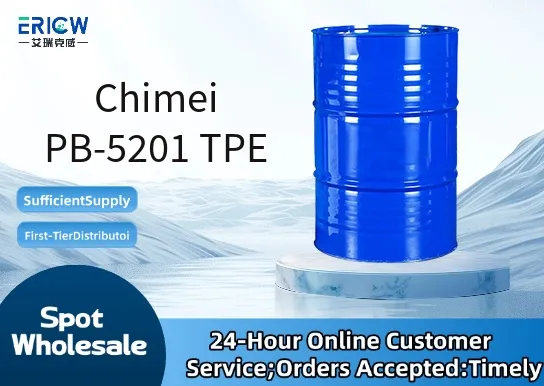
Excellent soft-touch feel with balanced hardness (Shore A 55)
Good processability via injection molding and extrusion
Enhanced thermal stability for consistent performance during processing
Low extractables and compliant with FDA 21 CFR §177.2600 for food-contact applications
Good resistance to UV exposure and long-term aging
Soft-grip overmolding for power tools and hand-held appliances
Seals and gaskets in automotive interior components
Food-grade kitchenware handles and utensil grips
Medical device housings requiring skin-safe, non-toxic materials
Consumer electronics protective cases and wearable device bands
| Chemical Type | Styrenic Thermoplastic Elastomer (TPE-S) |
| Product Form | Pellets |
| Appearance | Translucent, natural-colored pellets |
| Hardness (Shore A) | 55 ± 3 |
| Melt Flow Rate (230°C/2.16 kg) | 18–22 g/10 min |
| Density | 0.90–0.92 g/cm³ |
| Key Features | Soft-touch, low compression set, good adhesion to PP/PS substrates |
| Benefits | Easy processing, recyclable, halogen-free, RoHS compliant |
Q1: What is the primary function of Chimei PB-5201 TPE in polymer formulations?
A: Chimei PB-5201 TPE is a thermoplastic elastomer designed primarily as a compatibilizer and impact modifier, especially for polyolefin-based blends. It enhances interfacial adhesion between immiscible polymers and improves toughness without significantly compromising melt processability.
Q2: Is PB-5201 suitable for use in food-contact or medical-grade applications?
A: PB-5201 is not pre-certified for direct food-contact or medical applications. Its suitability depends on full formulation evaluation, including extraction testing and regulatory review by the end-user’s compliance team. It is commonly used in non-regulated industrial and consumer goods where flexibility and durability are prioritized.
Q3: How does PB-5201 perform under thermal processing conditions?
A: PB-5201 exhibits good thermal stability during standard extrusion and injection molding processes. It maintains structural integrity up to typical processing temperatures for polyolefins (e.g., 180–230 °C), with minimal degradation or volatiles when residence time is controlled and moisture is adequately removed prior to processing.
Q4: Can PB-5201 be blended with other TPEs or elastomers?
A: Yes — PB-5201 shows broad compatibility with common thermoplastic elastomers such as SEBS, TPOs, and certain TPVs. Blending can tailor hardness, elasticity, and surface feel, though optimal ratios depend on the specific matrix polymer and desired end-use properties.
Contact With Us:
E-mail: wangxingqiang@ericwchem.com
Have a Questions? Call Us:
Add:
Building A1, Jiete Industrial Park, Huangpu District, Guangzhou City, Guangdong Province, China