English
 Español
 tiếng việt
 русский
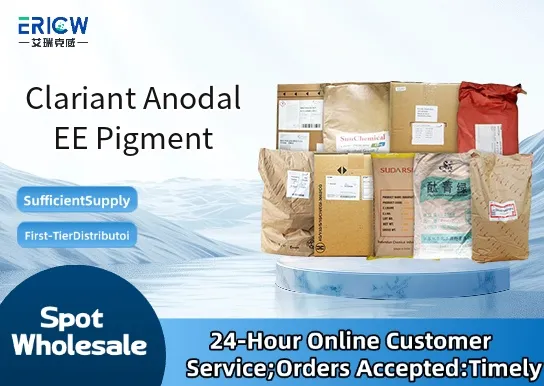
High thermal stability for demanding electrochemical anodizing processes.
Excellent lightfastness and weather resistance in outdoor architectural applications.
Consistent color reproducibility across batch-to-batch production.
Optimized particle size distribution for uniform pigment dispersion in electrolytes.
Low metal ion contamination, ensuring compatibility with high-purity anodizing baths.
Architectural aluminum anodizing for façades and curtain walls.
Consumer electronics housing (e.g., smartphone frames, laptop casings).
Automotive trim components requiring durable colored anodic layers.
Industrial signage and nameplates exposed to UV and moisture.
High-end furniture and interior design elements with decorative anodized finishes.
| Chemical Type | Inorganic metal oxide-based pigment |
| Product Form | Fine powder |
| Appearance | Free-flowing, uniformly colored powder |
| Primary Applications | Electrolytic coloring of anodized aluminum |
| Key Features | Thermally stable, non-bleeding, acid-resistant |
| Benefits | Enables vibrant, long-lasting colors without post-sealing discoloration |
| Storage Conditions | Store in dry, cool, well-ventilated area; protect from moisture |
| Regulatory Compliance | REACH compliant; RoHS compatible |
Q1: What is the primary application of Clariant Anodal EE Pigment?
A: Clariant Anodal EE Pigment is specifically engineered for use in anodized aluminum coloring, where it delivers excellent lightfastness, thermal stability, and uniform dyeing performance in electrolytic coloring processes.
Q2: Is this pigment suitable for food-contact or pharmaceutical applications?
A: Clariant Anodal EE Pigment is not intended for direct food-contact or pharmaceutical use. It is formulated for industrial metal finishing applications, and compliance with food-contact regulations would require separate evaluation and approval based on final formulation and regulatory jurisdiction.
Q3: How does Clariant Anodal EE Pigment differ from conventional organic dyes used in anodizing?
A: Unlike many conventional organic dyes, Anodal EE Pigment offers enhanced resistance to UV exposure and elevated process temperatures, enabling more durable coloration in demanding outdoor or high-temperature anodizing environments. Its particulate nature also contributes to improved color consistency and reduced bleeding during sealing.
Q4: What are the recommended handling and dispersion practices?
A: For optimal performance, disperse Clariant Anodal EE Pigment using high-shear mixing in aqueous electrolyte baths compatible with standard anodizing processes. Pre-wetting and gradual addition help prevent agglomeration. Always consult the Safety Data Sheet (SDS) and perform compatibility testing under actual process conditions.
Contact With Us:
E-mail: wangxingqiang@ericwchem.com
Have a Questions? Call Us:
Add:
Building A1, Jiete Industrial Park, Huangpu District, Guangzhou City, Guangdong Province, China