English
 Español
 tiếng việt
 русский
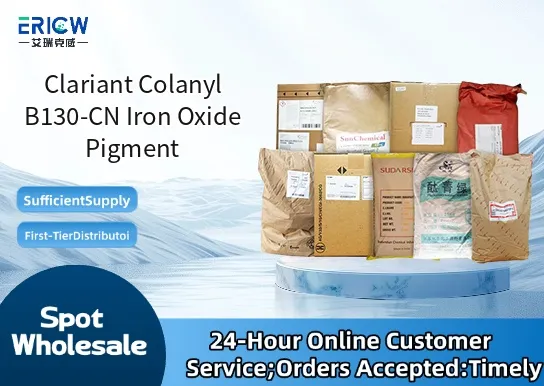
High chroma, reddish-brown iron oxide pigment with excellent color consistency and batch-to-batch reproducibility.
Optimized particle size distribution for superior dispersion stability in aqueous and solvent-based systems.
Outstanding lightfastness and weather resistance, meeting stringent durability requirements for outdoor applications.
Low oil absorption enabling high loading capacity and efficient formulation in cementitious and coating systems.
EC 1907/2006 (REACH) compliant with no SVHCs above threshold; suitable for regulated construction and industrial markets.
Cement-based architectural mortars and tile adhesives.
Exterior wall coatings and façade renders.
Concrete pavers and precast concrete elements.
Industrial floor coatings and epoxy grouts.
Plaster systems and dry-mix building materials.
| Chemical Type | Synthetic α-Fe₂O₃ (hematite) |
| Product Form | Free-flowing, dust-reduced powder |
| Appearance | Reddish-brown granular powder |
| Primary Applications | Construction materials, architectural coatings, cementitious systems |
| Key Features | High tinting strength, low abrasivity, pH-stable |
| Benefits | Enhanced color uniformity, reduced mixing energy, improved workability in mortar formulations |
| Storage Conditions | Store in cool, dry place; protect from moisture and direct sunlight |
| Regulatory Compliance | REACH registered; RoHS compliant; non-hazardous per GHS classification |
Q1: What is the primary chemical composition and pigment type of Colanyl B130-CN?
A: Colanyl B130-CN is a synthetic iron oxide pigment based on hematite (α-Fe₂O₃), engineered for high color strength, excellent lightfastness, and thermal stability in demanding industrial applications.
Q2: Is Colanyl B130-CN suitable for use in polyolefin compounds such as PP or PE?
A: Yes — it is specifically designed for thermoplastic applications including polypropylene and polyethylene. Its surface treatment ensures good dispersion stability and minimal plate-out during extrusion and molding processes.
Q3: How does Colanyl B130-CN perform under high-temperature processing conditions?
A: This pigment exhibits excellent thermal stability, maintaining consistent color and performance up to typical polyolefin processing temperatures (e.g., 200–260 °C), with negligible risk of discoloration or decomposition.
Q4: What is the recommended method for achieving optimal dispersion in masterbatch formulations?
A: For best results, pre-blend with carrier resin using high-shear compounding equipment; dosage typically ranges from 0.1% to 2% by weight depending on required opacity and shade intensity, and formulation compatibility should be verified via small-scale trials.
Contact With Us:
E-mail: wangxingqiang@ericwchem.com
Have a Questions? Call Us:
Add:
Building A1, Jiete Industrial Park, Huangpu District, Guangzhou City, Guangdong Province, China