English
 Español
 tiếng việt
 русский
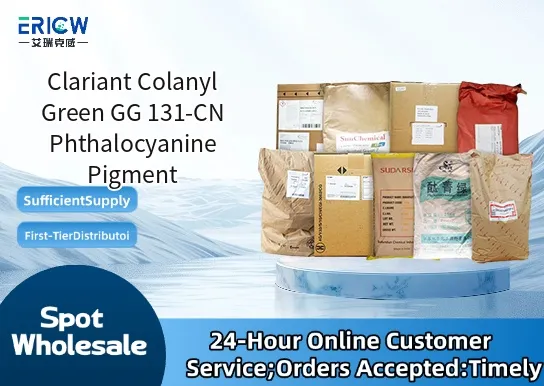
High chroma green shade with excellent bluish undertone for vibrant, clean coloration.
Outstanding thermal stability up to 250 °C, suitable for high-temperature processing including engineering plastics.
Superior lightfastness and weather resistance (ISO 105-B02: ≥7, Xenon fadeometer).
Excellent dispersibility in polar and non-polar polymer matrices, including polyolefins and PVC.
Low heavy metal content compliant with global regulatory frameworks including REACH and RoHS.
Coloration of polypropylene (PP) and polyethylene (PE) fibers and injection-molded parts.
Pigmenting rigid and flexible PVC compounds for building & construction profiles.
High-performance inks for packaging gravure and flexographic printing.
Automotive interior plastics requiring long-term UV and heat resistance.
Masterbatch formulations for demanding industrial applications.
| Chemical Type | Copper phthalocyanine derivative (chlorinated) |
| Product Form | Fine free-flowing powder |
| Appearance | Intense bluish-green crystalline powder |
| Primary Applications | Polyolefins, PVC, inks, masterbatches |
| Key Features | High tinctorial strength, excellent dispersion, thermal stability |
| Benefits | Consistent batch-to-batch color, low dust generation, regulatory compliance |
| Typical Particle Size (D50) | 0.08–0.12 µm (by laser diffraction) |
| Volatile Matter (105 °C, 2 h) | ≤0.5 wt% |
Q1: What are the key performance advantages of Colanyl Green GG 131-CN compared to conventional phthalocyanine green pigments?
A: Colanyl Green GG 131-CN offers enhanced dispersibility in polar polymer systems and improved thermal stability during high-shear compounding. Its optimized particle size distribution contributes to superior color strength, gloss retention, and reduced filter pressure buildup in masterbatch production.
Q2: Is this pigment suitable for use in food-contact plastics?
A: Colanyl Green GG 131-CN is designed for non-food-contact applications. It is not certified for direct or indirect food-contact use under major global regulatory frameworks. For food-safe alternatives, consult Clariant’s portfolio of FDA-compliant or EU-compliant pigments.
Q3: What types of polymers is Colanyl Green GG 131-CN most commonly used with?
A: This pigment demonstrates excellent compatibility and color development in polyolefins (PP, PE), styrenics (PS, ABS), and engineering thermoplastics such as PA6 and PBT. Performance in PVC and PET may require formulation optimization depending on processing conditions.
Q4: How should Colanyl Green GG 131-CN be dispersed for optimal results?
A: Best results are achieved using high-shear dispersion techniques—such as twin-screw extrusion or high-speed dissolvers—with appropriate wetting agents and carrier resins. Pre-dispersed masterbatches are recommended for consistent dosing and minimized handling variability.
Q5: What is the typical dosage range when using this pigment in polymer masterbatches?
A: Dosage depends on the target shade depth and final application requirements, but it is typically used at low concentrations—generally ranging from 0.1% to 2% by weight in the masterbatch concentrate—due to its high intrinsic color strength and tinting power.
Contact With Us:
E-mail: wangxingqiang@ericwchem.com
Have a Questions? Call Us:
Add:
Building A1, Jiete Industrial Park, Huangpu District, Guangzhou City, Guangdong Province, China