English
 Español
 tiếng việt
 русский
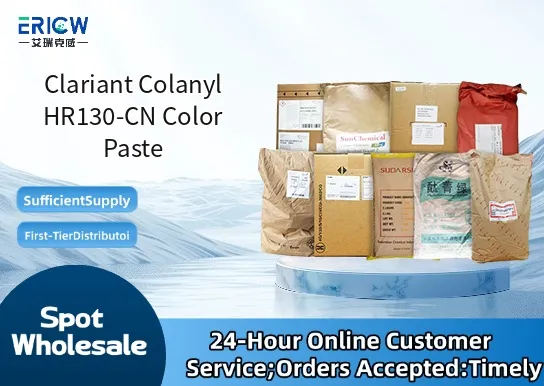
High chroma and excellent color consistency for precise batch-to-batch reproducibility.
Optimized for compatibility with polyolefin-based compounds, including PP and PE.
Low migration and excellent thermal stability up to 280 °C during processing.
Free from heavy metals and compliant with global regulatory requirements for consumer goods.
Ready-to-use liquid dispersion with high pigment loading and uniform particle distribution.
Automotive interior components (e.g., dashboards, trim, air vents).
Household appliances (e.g., washing machine drums, refrigerator liners).
Packaging for food-contact and non-food consumer products.
Technical injection-molded parts requiring UV-stable, durable coloration.
| Chemical Type | Organic pigment dispersion in polyolefin-compatible carrier system |
| Product Form | Free-flowing liquid color paste |
| Appearance | Homogeneous, viscous liquid with uniform color tone |
| Primary Applications | Polypropylene (PP), polyethylene (PE), and TPO compounds |
| Key Features | High dispersibility, low plate-out, excellent heat stability |
| Benefits | Reduced dosing variability, minimized machine fouling, consistent final part color |
| Storage Conditions | Store at 5–30 °C; protect from freezing and direct sunlight |
| Shelf Life | 12 months from date of manufacture under recommended conditions |
Q1: What is the primary application field for Colanyl HR130-CN Color Paste?
A: Colanyl HR130-CN is specifically developed for coloring polyolefin-based packaging materials, including flexible films and rigid containers used in food, pharmaceutical, and consumer goods applications. Its formulation emphasizes dispersion stability and thermal robustness during extrusion and thermoforming processes.
Q2: Is Colanyl HR130-CN compatible with common polyolefin resins such as PP and HDPE?
A: Yes — it is engineered for excellent compatibility with polypropylene (PP), high-density polyethylene (HDPE), and related copolymers. It demonstrates good melt dispersibility and minimal plate-out tendency under standard processing conditions.
Q3: How should Colanyl HR130-CN be incorporated into a polymer system?
A: It is typically added directly to the base resin via gravimetric or volumetric feeders during compounding or extrusion. Pre-blending with a portion of carrier resin may improve homogeneity in high-viscosity systems. Dosage depends on formulation requirements but generally ranges from 0.1% to 2% by weight.
Q4: Does this color paste meet regulatory requirements for food-contact applications?
A: Colanyl HR130-CN is formulated using pigments and additives compliant with major global food-contact regulations for polyolefins. Customers are advised to verify final compliance in their specific end-use configuration, including processing conditions and intended contact type.
Contact With Us:
E-mail: wangxingqiang@ericwchem.com
Have a Questions? Call Us:
Add:
Building A1, Jiete Industrial Park, Huangpu District, Guangzhou City, Guangdong Province, China